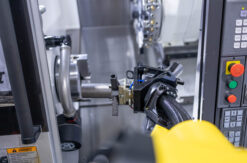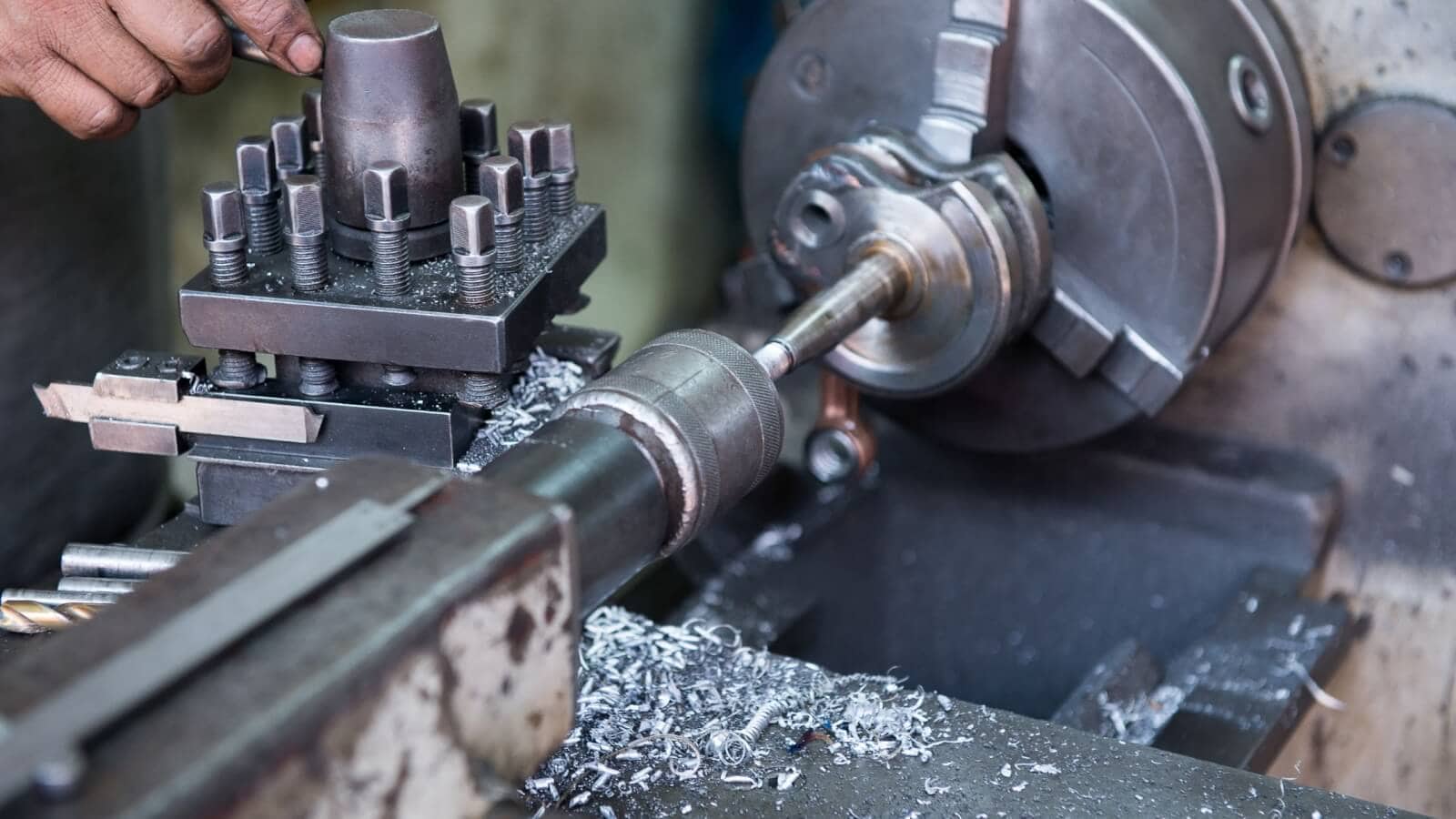
The global EDM graphite electrode market is on track to reach roughly $175 million in 2025 and continue growing through 2033, according to market research published this year. Behind that figure sits a larger story: the EDM mold and die sector is expanding as automotive, aerospace, medical, and electronics manufacturers demand more complex tooling. Every electrical discharge machining operation needs an electrode, and high RPM graphite milling machine has become the competitive edge for shops producing those electrodes faster and more accurately than the competition.
Furthermore, graphite presents unique challenges. Unlike metal cutting, graphite generates abrasive dust that wears tools and contaminates equipment. Speed matters too. Electrodes for complex molds may carry hundreds of intricate features, and shops that deliver them in hours rather than days win the order. As a result, capital equipment decisions made over the next 24 months will determine which mold makers stay competitive and which lose program work to faster shops.
What’s Driving Demand for High RPM Graphite Milling Machine
EV manufacturers, medical device producers, and consumer electronics brands all need precision molds. For instance, a single EV battery casing requires injection molds with internal cooling channels machined to micron-level tolerances. Those molds get built using graphite electrodes shaped on high-speed mills, then transferred to sinker EDM machines that burn the geometry into hardened tool steel.
Furthermore, the math is unforgiving. Each mold may require dozens of unique electrodes. A shop running outdated graphite milling equipment ties up capacity, delays the EDM step, and pushes finished tooling delivery dates out by weeks. By contrast, a mold maker running high-RPM graphite milling machine cells in parallel with sinker EDM cells can compress an eight-week tooling project into four or five.
In addition, customers increasingly require tighter cooling channel geometries, conformal cooling features, and micro-feature detail in their molds. These design trends drive electrode counts up sharply, since more complex molds mean more burn operations and more electrodes per project. Domestic mold makers face mounting pressure to compete with offshore tooling suppliers on both price and lead time, as covered in Twin Ballscrew Milling Machine Demand Rises as U.S. Manufacturers Reshore.
Why High RPM Graphite Milling Outperforms Lower Speeds
Graphite is soft compared to steel, but it demands aggressive feed rates and very high spindle speeds to produce clean surfaces without chipping. A 36,000 RPM spindle equipped with HSK-E25 tooling delivers the surface quality that downstream EDM operations require. By contrast, lower-speed mills can cut graphite, but the resulting surface roughness drives up EDM time and shortens electrode life.
Additionally, peer-reviewed research published through the U.S. National Library of Medicine documents how electrode grain size and cutting parameters directly influence material removal rate and surface texture on graphite used in EDM applications. Therefore, dialing in the right combination of spindle speed, feed rate, and tooling is not optional. It determines whether the electrode performs at the EDM stage or fails inspection before it ever reaches the burn cell.
Moreover, fine-grain electrode materials require even higher RPM to avoid edge chipping on small features. Sub-millimeter features are common in modern molds, and chipped edges on those features mean scrapped electrodes and rework. As a result, shops machining advanced grades of graphite increasingly view 30,000 RPM as a floor rather than a ceiling.
Dust Management on High RPM Graphite Milling Cells
Fine graphite particulate can ruin precision spindle bearings and contaminate other machine tools nearby. Modern graphite mills incorporate sealed enclosures, dedicated dust collection, and wash-down ready construction. These features are not add-ons. Instead, they make the difference between a machine that lasts a decade and one that needs major repairs in two years.
Therefore, shops adding graphite capacity should evaluate the entire ecosystem: filtration, ventilation, operator safety, and end-of-shift cleanup procedures. Moreover, the investment pays back through equipment longevity and consistent part quality. The Manufacturing Extension Partnership program at NIST supports manufacturers across all 50 states in identifying equipment investments that deliver measurable operational gains.
In addition, dust management has become a workforce issue. OSHA exposure limits on respirable dust drive shop layout decisions, and operators increasingly expect modern, sealed cells rather than open machining bays. Consequently, shops investing in proper graphite cells gain an edge in both regulatory compliance and recruiting.
Tooling Choices That Maximize High RPM Performance
HSK-E25 tool holders provide the rigidity and balance required at 36,000 RPM. Smaller-diameter tools, often required for fine electrode features, depend on tool holder runout staying below a few microns. By contrast, conventional CAT-style holders cannot match HSK performance at these speeds, which is why graphite-specific machines almost universally specify HSK-E25 or HSK-E32 interfaces.
Automatic tool changers with 20, 40, or 60 positions enable lights-out operation on complex electrode jobs. For example, a program may call for 30 different tools across roughing, semi-finishing, and finishing operations. As a result, larger ATC capacity means fewer operator interventions and longer unattended runs.
Furthermore, diamond-coated and CVD-coated cutters now dominate graphite tooling for serious production work. These tools last five to ten times longer than uncoated carbide on graphite, dramatically reducing per-electrode tooling cost. Therefore, the combination of high RPM, HSK tool holders, and advanced cutter coatings has reshaped the economics of electrode production over the past decade.
The Aerospace Tooling Connection
While mold and die work drives the bulk of graphite electrode demand, aerospace tooling is a fast-growing segment. Turbine blade molds, casting dies for engine components, and specialized fixtures all use EDM extensively. For example, single-crystal turbine blade casting requires ceramic core production, which depends on precision dies machined using graphite electrodes.
Consequently, the aerospace sector’s massive backlog is creating ripple effects across the supplier base, including shops that produce the tooling used to make aerospace parts. Tier 2 and Tier 3 suppliers serving engine programs are absorbing tooling work that previously went overseas, and that work flows downstream to the mold makers and EDM shops in their supply networks. For deeper context, see Aerospace Alloy Milling Machine Demand Soars on Record Backlog.
Investment Outlook for Mold Makers
The shops that win the next decade of mold work are investing now. Lead times on high-RPM graphite cells run six to twelve months, and process validation takes additional time after installation. Therefore, a shop that orders today is realistically eighteen months away from full production output on a new cell.
By contrast, a shop that waits for confirmed orders before investing will discover those orders went to competitors with capacity already in place. Moreover, customers increasingly audit tooling supplier capabilities before awarding programs, and modern equipment is part of the qualification conversation. As a result, capability investment is no longer a defensive move. It is the entry ticket for serious program work.
Iron Machine Tool: Your Partner in Precision CNC Solutions
At Iron Machine Tool, we deliver specialized graphite milling solutions for mold makers, tool and die shops, and aerospace tooling producers. Our team understands the demands of high-speed graphite work.
Our Services Include:
- 3-Axis Precision Milling — Including the Roku HC-435-II Graphite with 36,000 RPM spindle and HSK-E25 tool holder
- Sinker EDM Solutions — Complete tooling production support
Ready to Improve Your Tooling Throughput? Contact Iron Machine Tool to discuss how high RPM graphite milling can transform your shop.
Works Cited
“Manufacturing Extension Partnership (MEP).” National Institute of Standards and Technology, U.S. Department of Commerce, www.nist.gov/mep. Accessed 29 Apr. 2026.
Nowicki, Rafał, et al. “The Surface Texture Properties After Electrical Discharge Machining With Negative Polarity Using Graphite Electrodes of Different Grain Sizes.” Scientific Reports, U.S. National Library of Medicine, 2024, www.ncbi.nlm.nih.gov/pmc/articles/PMC12852710/. Accessed 29 Apr. 2026.