
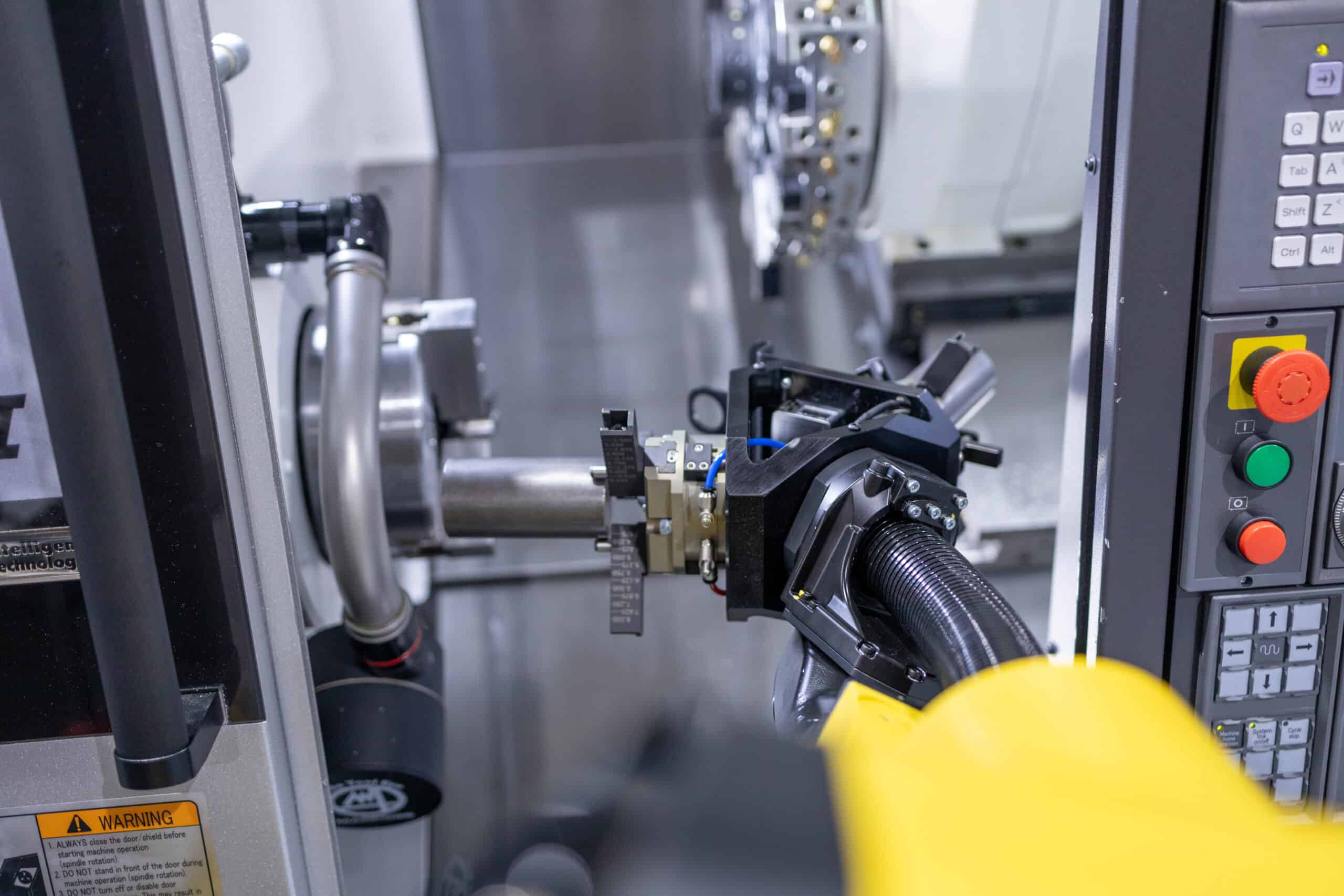
Iron Machine Tool: Advanced Milling Automation for Midwest Manufacturers
Precision machine shops across Minnesota, Wisconsin, Iowa, and the Dakotas are confronting an uncomfortable reality: the machinists retiring this year outnumber those entering the trade by a significant margin. With 34,200 openings for machinists and tool and die makers projected annually through 2034—nearly all from retirements and career exits—the mathematics of workforce replacement simply do not work in manufacturers’ favor. This demographic crisis is accelerating automation adoption at speeds the industry has not seen since the introduction of CNC technology itself.
The numbers paint an urgent picture. Minnesota alone expects more than 93,000 job openings for manufacturing production positions through 2032, according to Minnesota CareerForce data.Midwest manufacturing workforce crisis in the state reported just under 7,750 job vacancies in 2024, with employers struggling to fill positions even as they offered wages averaging $83,280 annually—twelve percent higher than the state’s overall average. When a skilled machinist position sits open for months while profitable work gets turned away, automation transforms from a nice-to-have investment into a survival imperative.
Reshoring is compounding this pressure. The Reshoring Initiative documented 244,000 manufacturing jobs announced in 2024 through reshoring and foreign direct investment, bringing total commitments since 2010 to over 2.5 million positions. These new facilities need precision-machined components—and the shops capable of producing them. For Midwest precision manufacturers positioned between coastal manufacturing hubs, the combination of onshoring demand and workforce constraints creates both extraordinary opportunity and existential risk.
The Demographic Time Bomb in Precision Machining
The workforce crisis affecting Midwest machine shops reflects broader trends transforming American manufacturing. Deloitte and The Manufacturing Institute project 2.1 million manufacturing jobs could remain unfilled by 2030, with potential economic costs reaching $1 trillion annually. The study, based on surveys of more than 800 manufacturing leaders, identified the skills gap as manufacturers’ most pressing challenge—a concern that predated the pandemic and has only intensified since.
Fabricated metals manufacturing, which includes machine shops, faces particularly acute pressure. Bureau of Labor Statistics data shows the median age of machine shop workers at 49 years old—among the highest of any manufacturing subsector—indicating imminent retirement waves that will strip shops of their most experienced talent. These departures carry consequences beyond simple headcount losses; decades of process knowledge, setup expertise, and tribal wisdom about specific machines walk out the door with each retirement.
Understanding How Lights-Out Milling Is Transforming Tool and Die Operations Across the Upper Midwest becomes essential context for shops evaluating their response to these workforce pressures. The traditional solution of training replacement machinists cannot scale quickly enough when community college machining programs graduate only hundreds of students annually against thousands of vacancies.
The competitive dynamics grow more challenging when examining where labor actually goes. Warehouse and distribution jobs, semiconductor fabrication facilities, and construction trades all compete for workers who might otherwise consider precision manufacturing careers. Entry-level manufacturing positions averaging competitive wages still struggle against logistics operations offering immediate hiring and simpler skill requirements. Shops that cannot differentiate themselves through technology, compensation, and working conditions find their candidate pools shrinking further each year.
Automation Economics Reach Inflection Point
The financial case for milling automation has fundamentally shifted over the past three years. Equipment costs have decreased while capabilities have expanded, compressed timelines have shortened implementation periods, and labor costs have risen to levels that accelerate payback calculations. The result: automation investments that once required five to seven years to justify now achieve positive returns within twelve to twenty-four months for many applications.
The Bureau of Labor Statistics Occupational Outlook data reveals the underlying economics. Median annual wages for machinists reached $56,150 in May 2024, with tool and die makers earning $63,180 annually. When shops factor in benefits, overtime premiums, recruitment costs, and training investments, fully-loaded labor costs for skilled machinists routinely exceed $80,000 annually. Against these costs, automation systems capable of extending productive machine hours from single shifts to around-the-clock operation demonstrate compelling returns.
Modern automation solutions transform machine utilization from typical rates of 30-40 percent to utilization approaching 95 percent. The mathematics multiply quickly: a five-axis milling center representing $500,000 in capital produces three times the output when automated versus manually attended. This capacity multiplication enables shops to accept work they would otherwise decline while actually reducing per-part costs through extended amortization of fixed equipment investments.
Night shift efficiency gains illustrate the transformation most dramatically. Automated systems increase unattended production efficiency by approximately 50 percent compared to traditional manually-attended night shifts. Shops that previously struggled to staff second and third shifts—or paid substantial premiums to attract workers to undesirable hours—can now operate continuously without corresponding labor challenges. This lights-out capability represents the single most significant competitive differentiator for shops positioning themselves against both domestic and international competition.
Regional Market Dynamics Driving Investment
The upper Midwest’s manufacturing concentration creates unique automation dynamics. Minnesota ranks among the top manufacturing states by employment percentage, with over 320,000 workers in the sector representing one in nine jobs statewide. This density supports robust supplier ecosystems, specialized workforce development programs, and equipment distributors who understand regional industry requirements. Shops evaluating automation investments benefit from local expertise unavailable in less manufacturing-intensive regions.
State support mechanisms provide additional investment incentives. Minnesota’s Enterprise Minnesota organization tracks manufacturing confidence and investment patterns annually, documenting how regional manufacturers respond to technology opportunities. Their State of Manufacturing surveys consistently identify workforce challenges among top concerns while noting increased openness to automation solutions as remediation strategies. Grant programs, workforce training credits, and economic development support help offset implementation costs for qualifying manufacturers.
The reshoring trend creates particular opportunity for Midwest precision shops. Geographic position between coastal manufacturing hubs positions regional suppliers as attractive partners for companies restructuring supply chains. Manufacturers seeking domestic alternatives for precision components often prefer suppliers in the industrial heartland, where logistics costs remain reasonable and manufacturing culture runs deep. Shops positioned to capitalize on this demand—meaning those with capacity to accept new work—capture growth opportunities that capacity-constrained competitors must decline.
Industry vertical alignment matters significantly in automation decisions. Tool and die shops serving automotive suppliers face different pressures than medical device contract manufacturers or aerospace component producers. Each sector carries unique tolerance requirements, documentation demands, and volume characteristics that influence which automation approaches deliver maximum impact. Shops serving multiple verticals must balance flexibility requirements against efficiency gains that specialized automation provides.
Technology Integration Realities
Contemporary milling automation extends far beyond simple machine tending. Integrated systems combine workpiece handling, tool management, in-process measurement, and job scheduling into unified platforms that maximize productive spindle time while minimizing human intervention requirements. Understanding these technology layers helps manufacturers evaluate solutions against their specific operational contexts.
Workholding automation enables unattended operation by eliminating manual fixture changes and part loading. Pallet systems, tombstone configurations, and robotic loading cells each address different production scenarios. High-mix environments benefit from flexible solutions that accommodate varying part geometries without extensive changeover requirements. High-volume applications leverage dedicated automation optimized for specific part families and maximum throughput.
For manufacturers evaluating specific equipment configurations and investment frameworks, What Minnesota Manufacturers Should Know Before Investing in 5-Axis Milling Automation provides essential guidance on matching technology solutions to operational requirements and calculating realistic return expectations.
Tool management integration addresses another automation bottleneck. Manual tool changes, measurement, and replacement consume significant unattended operation potential if not automated. Modern systems incorporate automatic tool measurement, wear compensation, and magazine management that keep spindles cutting rather than waiting for human intervention. The most sophisticated implementations predict tool replacement requirements and schedule changes during planned breaks in production cycles.
Quality verification increasingly occurs in-process rather than post-production. Probing systems verify workpiece positioning, confirm critical dimensions during machining, and detect deviations before they propagate through entire production runs. This integration reduces scrap rates while providing documentation that demanding customers increasingly require. Shops serving aerospace, medical, or defense markets find in-process verification essential for meeting traceability requirements.
Implementation Considerations for Regional Shops
Automation adoption requires realistic assessment of current capabilities, future requirements, and organizational readiness. Shops rushing into automation without adequate preparation often experience extended implementation timelines, disappointing utilization rates, and frustrated workforces. Conversely, manufacturers who approach automation systematically typically achieve or exceed projected returns while building foundations for continued advancement.
Workforce implications deserve careful consideration. Automation changes job content rather than eliminating jobs for most implementations. Machinists transition from machine operators to system supervisors, managing multiple automated cells rather than attending individual machines. This evolution requires different skills—programming, troubleshooting, process optimization—than traditional machining roles. Successful implementations invest in workforce development concurrently with equipment deployment.
Infrastructure requirements vary significantly by automation approach. Robotic cells require floor space, utilities, and environmental controls that some facilities cannot accommodate without modification. Pallet automation integrates more readily into existing layouts but may require equipment repositioning or facility upgrades. Realistic site assessment early in evaluation processes prevents expensive surprises during implementation.
Integration with existing systems determines how quickly automation delivers value. Shops with established CAM programming, tool management, and production scheduling find automation implementation smoother than those building these capabilities concurrently. The most successful implementations treat automation as capstone investments that leverage prior technology investments rather than standalone projects requiring simultaneous development of multiple supporting capabilities.
Iron Machine Tool: Your Partner in Milling Automation
Iron Machine Tool specializes in helping Midwest precision manufacturers implement automation solutions that address workforce constraints while improving competitive positioning. Founded by industry veteran Steve Brown, who brings fifteen years of experience with leading machine tool and automation suppliers, our team understands both the technology possibilities and the practical realities of implementing automation in working production environments.
Our Services Include:
- Milling Automation Systems – Complete automation solutions from Mitsubishi, EROWA, and OPS Ingersoll designed for tool and die, mold making, aerospace, and medical manufacturing applications
- Automation Assessment and Implementation Planning – Expert guidance helping manufacturers evaluate automation opportunities, calculate realistic returns, and develop implementation roadmaps
Ready to Explore Automation? Contact Iron Machine Tool to discuss how milling automation can address your workforce challenges while positioning your operation for growth in the reshoring economy.
Works Cited
“Machinists and Tool and Die Makers.” Occupational Outlook Handbook, U.S. Bureau of Labor Statistics, 28 Aug. 2025, www.bls.gov/ooh/production/machinists-and-tool-and-die-makers.htm. Accessed 10 Dec. 2025.
“Manufacturing.” CareerForce, Minnesota Department of Employment and Economic Development, careerforce.mn.gov/industry/manufacturing. Accessed 10 Dec. 2025.
Related Articles
- How Lights-Out Milling Is Transforming Tool and Die Operations Across the Upper Midwest
- What Minnesota Manufacturers Should Know Before Investing in 5-Axis Milling Automation


