
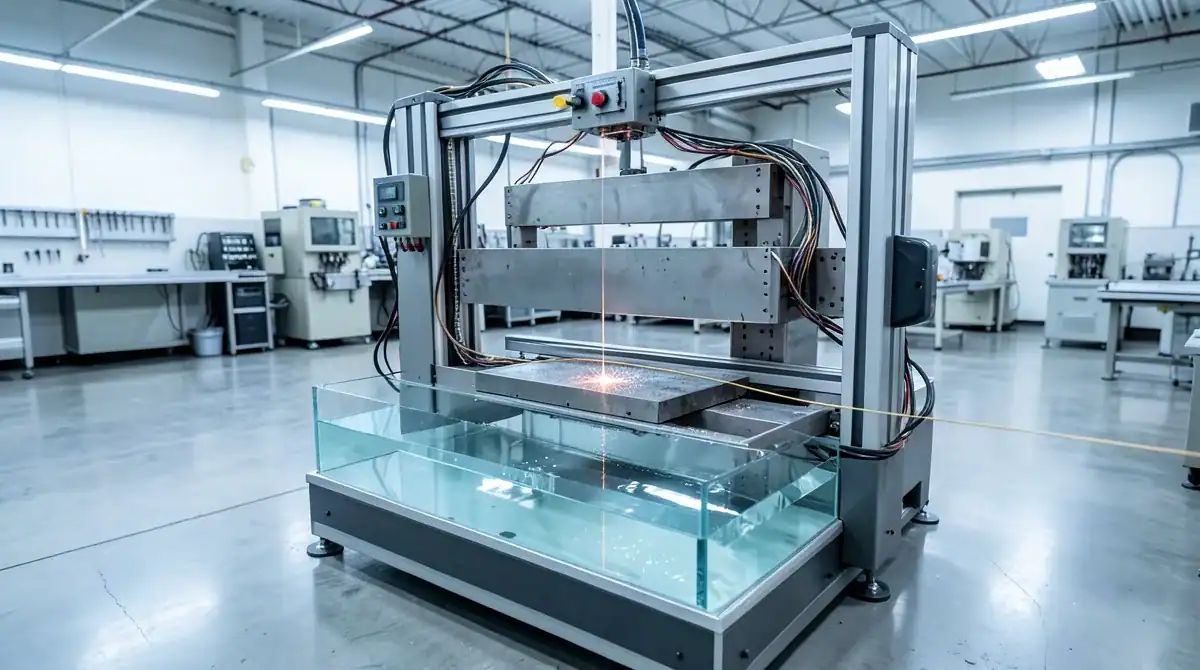
Quotes get compared side by side. Operating costs rarely do, and that is where the money actually goes over a decade of production.
QWhat does EDM machine cost of ownership actually include?
EDM machine cost of ownership covers five recurring categories past the purchase price: electrical power, consumables, service and spare parts, floor and environmental conditioning, and operator time. Each one repeats every year the machine runs. Together they often outweigh the original capital outlay across a machine’s working life.
Where machine prices sit right now
Capital cost is the number everyone starts with, and it has moved.
The Producer Price Index for metalworking machinery manufacturing stood at 168.3 in September 2026, measured against a December 2003 base of 100. That index tracks what American metalworking machinery sells for at the factory gate, and the distance from the base year is the part worth absorbing.
A shop comparing a 2026 quote against a number it remembers from an earlier purchase is comparing across that gap. The quote is not inflated. What moved was the baseline.
Line item one: electrical power
EDM removes metal through controlled electrical discharge, so power is not incidental to the process. It is the process.
The U.S. Energy Information Administration’s October 2026 Short-Term Energy Outlook forecasts the average industrial retail electricity price at 9.05 cents per kilowatthour in 2026, up from 8.62 cents in 2025, with a further rise to 9.15 cents projected for 2027.
Rather than guess at a machine’s draw, take the rated connected load from the manufacturer’s specification sheet, multiply by the hours you expect to run, and apply your own utility rate. The EIA figure tells you which direction that line is heading nationally. Your actual rate is on your bill, and in a lights-out operation the hours multiply quickly.
QHow long should the comparison run?
Match the comparison window to how long you expect to own the machine. A five-year view and a ten-year view can favor different quotes, because recurring costs compound while the capital difference stays fixed. Most EDM platforms stay in production well past five years.
Shops tend to default to a three-year payback habit borrowed from tooling. Capital equipment behaves differently. The purchase price is paid once. Power, consumables, and service repeat every year the machine runs.
That is why the recurring columns deserve the same scrutiny as the quote.
Line item two: consumables
Wire EDM consumes wire continuously, and the spool is only part of it. Filters, deionizing resin, guides, power feed contacts, and dielectric fluid all deplete on a schedule tied to run hours.
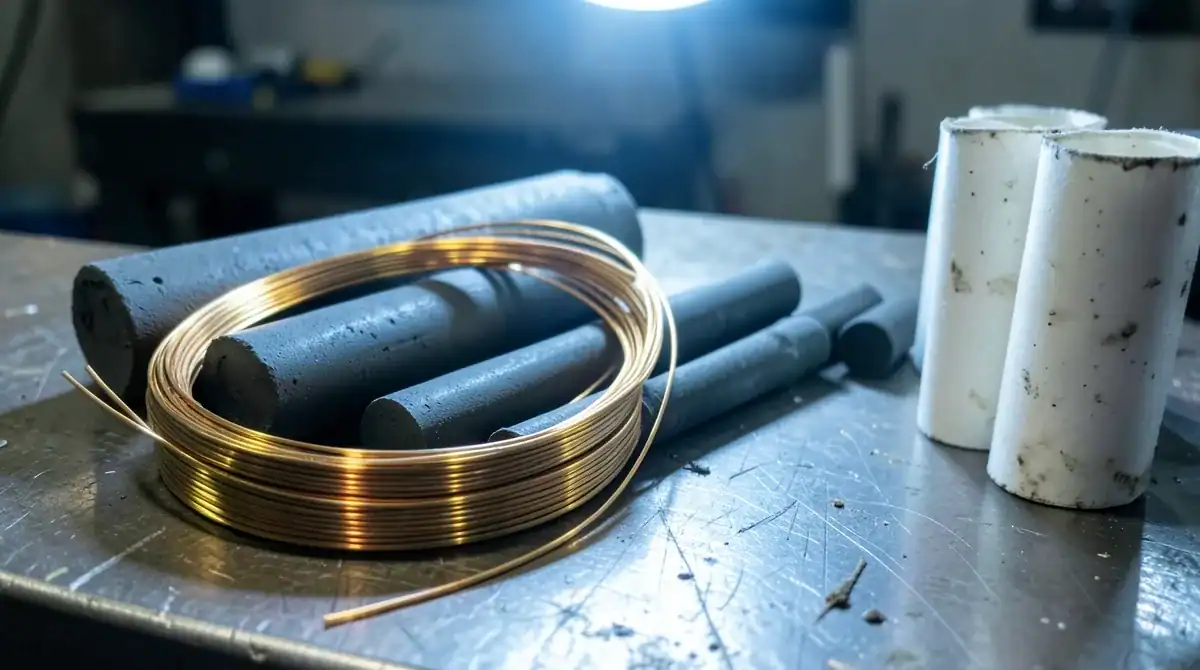
Sinker EDM shifts the consumable burden upstream into electrodes. Graphite and copper stock, plus the milling time to cut them, belong in the operating column rather than the capital one.
Hole drilling consumes tube electrodes and guides.
None of these appear on a quote. All of them appear on a purchase order, every month, for as long as the machine runs.
Line item three: service and spare parts
Two costs hide here: the parts themselves, and the downtime while you wait for them.
Parts availability and technician response time are worth asking about in specific terms before signing. A machine that is down costs you the margin on whatever it was supposed to be cutting.
Ask which parts are stocked domestically and which are not. Generators, drives, and control boards sit in a different category from filters and guides. What to ask a distributor about service coverage deserves its own conversation.
Line item four: floor and environment
Thermal stability affects dimensional accuracy, so tight-tolerance work often needs conditioned space. Filtration, dielectric handling, and waste disposal carry their own recurring costs.
Graphite milling adds dust collection. Floor space itself has a cost, whether you rent it or own it.
Line item five: operator time
Setup, electrode preparation, inspection, and programming are labor hours attached to the machine. Automation changes the shape of this line rather than removing it. Someone still stages the work and verifies the output.
Training time belongs here as well, both at installation and when a new operator joins.
QIs a cheaper machine actually cheaper?
Not reliably. A lower purchase price can carry higher consumable draw, longer service response, shorter parts availability, or weaker rated accuracy that forces slower settings. The honest comparison runs the five recurring line items across the years you expect to own the machine, rather than stopping at the quoted figure.
How the arithmetic changes the answer
Two quotes separated by a meaningful capital gap can invert once the recurring columns are filled in.
Run the hours, not the rate. A machine running two shifts accumulates consumables and power at roughly twice the pace of a single-shift machine.
Price the downtime, not just the part. A spare that ships overnight and one that ships in three weeks carry different real costs.
Separate rated accuracy from achieved accuracy. A machine rated to hold a tolerance under specified conditions is making a statement about those conditions, which may include thermal control you have not budgeted for.
Count the electrode pipeline. For sinker work, the mill feeding the burn queue is part of the cost of the burn.
What this means for a 2026 purchase
Machinery prices sit well above their 2003 baseline and industrial power costs are projected to keep climbing through 2027. Both push in the same direction: the recurring columns matter more now than they did when a shop last bought.
Automation changes the shape of several of these columns at once, and the payback arithmetic deserves its own look before a cell is priced in.
The shops that negotiate well tend to arrive with their own operating assumptions already written down. They are not asking what the machine costs. The question is what it costs to run, checked against their own floor.
Iron Machine Tool: EDM and Precision Milling for Midwest Manufacturers
Iron Machine Tool is the exclusive Midwest distributor for Mitsubishi Electric, OPS-Ingersoll, and Roku-Roku Sangyo, serving manufacturers across Minnesota, Wisconsin, Iowa, and surrounding states from Minneapolis. Founded in 2022 by Steve Brown, who brings 15+ years of hands-on EDM experience, the company supports customers from consultation through installation, training, and ongoing service. Mitsubishi machines are supported by MC Machinery Systems, which operates 5 Technical Centers across North America with over 300 dedicated service professionals.
Our Machinery Solutions Include:
- Machinery Solutions — the full wire EDM, sinker EDM, hole drilling, milling, and automation lineup
- Industries We Serve — aerospace, medical, automotive, robotics, industrial and electrical, and commercial applications
Evaluating a machine? Talk to Steve Brown about your application, tolerances, and timeline.
Works Cited
- “Producer Price Index by Industry: Metalworking Machinery Manufacturing (PCU33353335).” FRED, Federal Reserve Bank of St. Louis, U.S. Bureau of Labor Statistics, Sept. 2026, fred.stlouisfed.org/series/PCU33353335. Accessed 28 Oct. 2026.
- “Table 7c. U.S. Regional Electricity Prices to Ultimate Customers.” Short-Term Energy Outlook, U.S. Energy Information Administration, Oct. 2026, www.eia.gov/outlooks/steo/tables/pdf/7ctab.pdf. Accessed 28 Oct. 2026.


