
A capital equipment decision is usually described as choosing a machine. In practice a shop is choosing two things at once, and the second one lasts longer.
QHow do you choose a machine tool distributor?
Judge a machine tool distributor on what happens after the sale: technician coverage in your region, parts availability and lead times, operator training, and whether someone with hands-on process knowledge answers when you call. The machine specification comes from the manufacturer. Support quality is what the distributor actually supplies.
The service workforce is the constraint behind the promise
Every distributor describes its support as strong. Federal employment data shows why that claim is harder to deliver on than it sounds.
The Bureau of Labor Statistics projects employment of industrial machinery mechanics to grow 18 percent between 2025 and 2035, from 446,900 to 526,600, an increase of about 79,700 positions. Across the wider group that includes machinery maintenance workers and millwrights, BLS projects roughly 51,900 openings a year over the decade.
Demand for people who fix machines is rising faster than most manufacturing occupations. Median annual pay for industrial machinery mechanics was $64,520 in May 2025.
Read that alongside the tool and die trend and the picture sharpens: the people who run machines are getting scarcer, and the people who service them are being competed for. A distributor’s service bench is a real asset, not a line in a brochure.
Knowing how to choose a machine tool distributor is a 2026 problem
Two conditions make this harder than it was a decade ago.
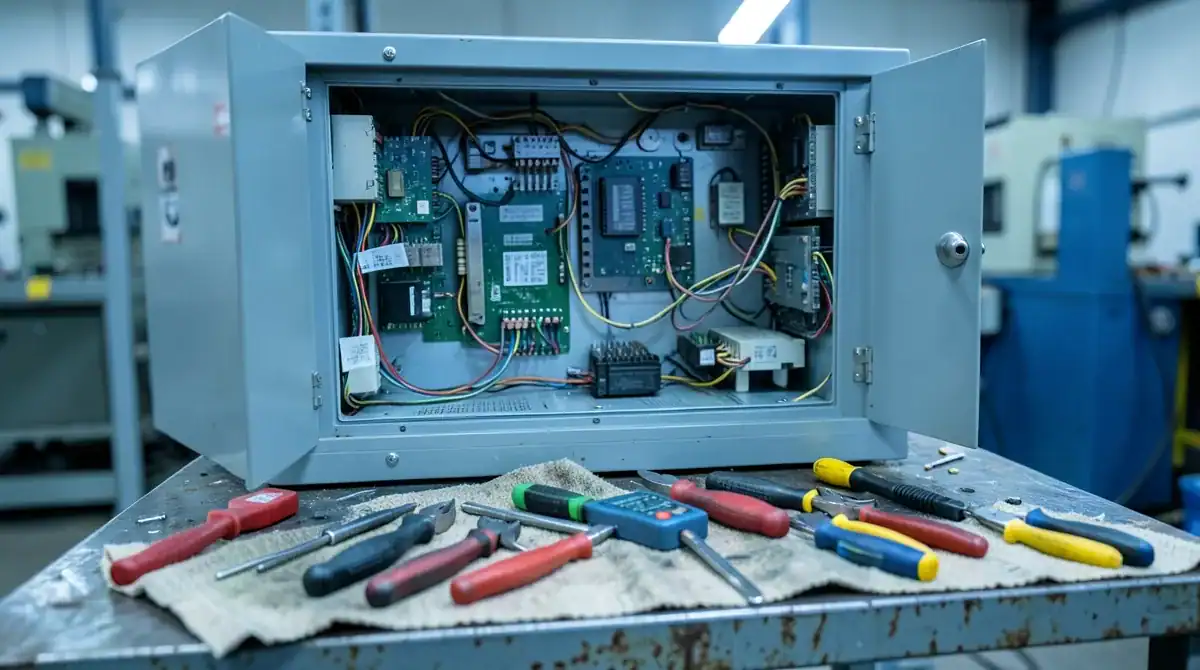
Machines carry more automation, more control software, and more integration than they used to. That raises what a service call demands of the technician.
At the same time, the service workforce is being competed for across every manufacturing sector, not only machine tools.
A distributor that was adequate for a standalone machine in 2015 may not be adequate for an automated cell in 2026. The evaluation has to account for what you are actually installing.
Seven questions worth asking before signing
Where is the nearest technician based? Not the nearest office. The nearest person who can open the machine.
What is the realistic response time for a down machine? Ask for the normal case and the bad case, in hours or days.
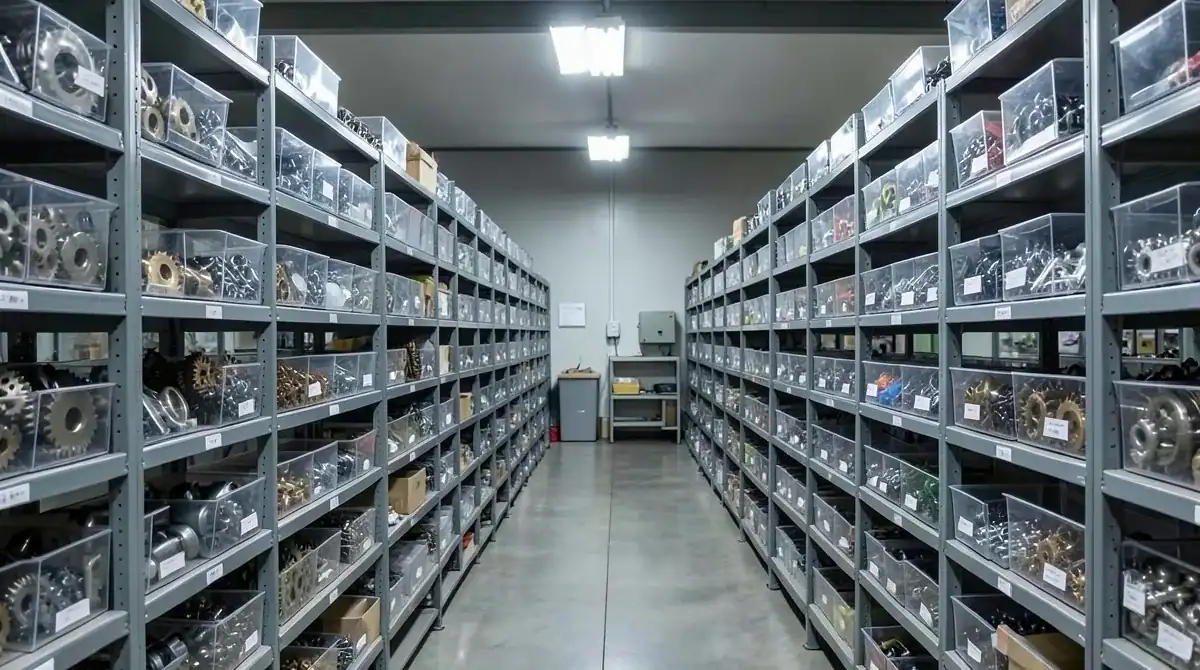
Which spare parts are stocked domestically? Filters and guides are one category. Generators, drives, and control boards are another.
Who trains the operator, and for how long? Training length and format vary widely, and a short handover on a process-heavy machine is a slow problem.
What happens at year five? Parts availability and software support over a decade matter more than the first-year warranty.
Who answers a process question? A tolerance or electrode strategy question needs someone who has run the work, not a ticket queue.
What is the install path? Rigging, power, foundation, and commissioning all sit between the purchase order and the first part. That timeline stretches further once a cell is involved, which is part of what makes automation payback its own calculation.
Why regional presence is not a marketing point
Minnesota is a dense manufacturing state, and the numbers support treating it that way.
The state’s manufacturing profile from Minnesota DEED reports 320,328 manufacturing jobs across 8,528 establishments in 2024, with an average annual manufacturing wage of $83,250, drawn from the Quarterly Census of Employment and Wages.
That density cuts both ways. A regional distributor covers more shops per mile, which supports a service bench. It also means a technician can be at another customer’s machine when yours stops.
Asking how many machines a territory covers, and how many technicians cover it, gets closer to the truth than asking whether service is good.
QDoes the brand or the distributor matter more?
Both, for different reasons. The manufacturer sets rated capability, control, and build quality. A distributor decides how quickly the machine is installed, how well the operator is trained, how fast it returns to service, and whether anyone can answer a process question. Strong machines behind weak support still sit idle.
QWhat does a distributor owe you after installation?
Expect commissioning, operator training, documented parts access, and a defined route to technical support. Those terms belong in writing before the order, not in conversation after it. Published specifications come from the manufacturer; installation, training, and response are what a distributor is accountable for.
Territory density is a question you can ask directly
How many machines does the territory hold, and how many technicians cover it? Both numbers exist. A distributor who will share them is telling you something useful.
The ratio matters more than the headcount. Ten technicians across a national footprint is thinner coverage than two across a single state.
Where the evaluation usually goes wrong
Three patterns come up repeatedly.
Comparing spec sheets rather than applications. Two machines can look similar on paper and behave differently on your part.
Treating the quote as the cost. The recurring line items past the purchase price often decide which machine was actually cheaper.
Leaving timing to the end. Install dates interact with production planning, and a late commissioning date can push first parts into the following quarter.
Accepting general assurances. Vague answers about coverage tend to stay vague once the machine is on your floor.
Put the answers in writing
Verbal assurances are easy to give and hard to recall a year later.
Response targets, stocked parts, training hours, and the escalation path can all go into the purchase documentation. A distributor confident in its operation rarely objects.
What a good answer sounds like
Specific, and occasionally unflattering.
A distributor who says a technician can usually be on site within a defined window, names the stocked parts, and is straight about what takes longer to source is describing a real operation. One who calls the support excellent and stops there is describing nothing at all.
The same applies to process questions. Ask something hard about your actual part during the sales conversation. The quality of that answer previews what the next ten years will feel like. Whoever answers it is whoever your shop ends up calling.
Iron Machine Tool: EDM and Precision Milling for Midwest Manufacturers
Iron Machine Tool is the exclusive Midwest distributor for Mitsubishi Electric, OPS-Ingersoll, and Roku-Roku Sangyo, serving manufacturers across Minnesota, Wisconsin, Iowa, and surrounding states from Minneapolis. Steve Brown founded the company in 2022 and brings 15+ years of hands-on EDM experience, handling inquiries directly. Mitsubishi machines are supported by MC Machinery Systems, which operates 5 Technical Centers across North America with over 300 dedicated service professionals.
Our Machinery Solutions Include:
- About Us — founder-led technical support from consultation through installation, training, and ongoing service
- Industries We Serve — aerospace, medical, automotive, robotics, industrial and electrical, and commercial applications
Evaluating a machine? Talk to Steve Brown about your application, tolerances, and timeline.
Works Cited
- “Industrial Machinery Mechanics, Machinery Maintenance Workers, and Millwrights.” Occupational Outlook Handbook, U.S. Bureau of Labor Statistics, www.bls.gov/ooh/installation-maintenance-and-repair/industrial-machinery-mechanics-and-maintenance-workers-and-millwrights.htm. Accessed 28 Oct. 2026.
- “Minnesota Manufacturing Profile.” Minnesota Department of Employment and Economic Development, Quarterly Census of Employment and Wages, 2024, mn.gov/deed/assets/manufacturing-profile_tcm1045-595830.pdf. Accessed 28 Oct. 2026.
