

Iron Machine Tool — Advanced EDM and precision machining technology for Midwest manufacturers, backed by Mitsubishi Machinery Systems.
The aerospace and defense industry crossed a threshold in 2025 that will shape supplier order books deep into 2026: for the first time, the top 100 A&D companies’ combined revenue and the global commercial aircraft backlog each passed $1 trillion, according to PwC’s 2026 aerospace and defense outlook. Industry-wide operating profit grew 46% in a single year, and A&D deal value hit $29 billion as companies moved to secure supply chains and defense technology. The commercial backlog now stands near 15,000 aircraft — years of production at current rates. And in April 2026, crewed exploration returned to the moon for the first time in over 50 years, a marker of how much ambition the sector is carrying into the year. Both major commercial jet makers are targeting double-digit delivery increases in 2026, and orbital launches set a new global record in 2025 — signs that momentum is building across commercial aviation, defense, and space at once.
Why This Lands on the Shop Floor
Every one of those aircraft needs engines, and modern turbine engines are among the most EDM-intensive products in all of manufacturing. Turbine blades and vanes survive combustion temperatures above the melting point of the metal they’re made from only because they’re riddled with hundreds of tiny, precisely angled cooling holes that bleed air across their surfaces. Conventional drills can’t produce those holes in nickel superalloys without cracking the part or destroying the tool. Small-hole EDM — EDM hole drilling, sometimes called fast-hole or “hole-popping” EDM — is the process of record because it cuts any electrically conductive material regardless of hardness, holds tight positional tolerances, and leaves no cutting tool to wear out. As engine build rates rise to feed the backlog, demand for cooling-hole drilling rises directly with them. That surge is a major reason US machine tool orders are running roughly a third ahead of last year, as detailed in The 2026 EDM and Precision Machining Forecast: Automation Powers the Second Half.
The Aftermarket Is the Bigger Story
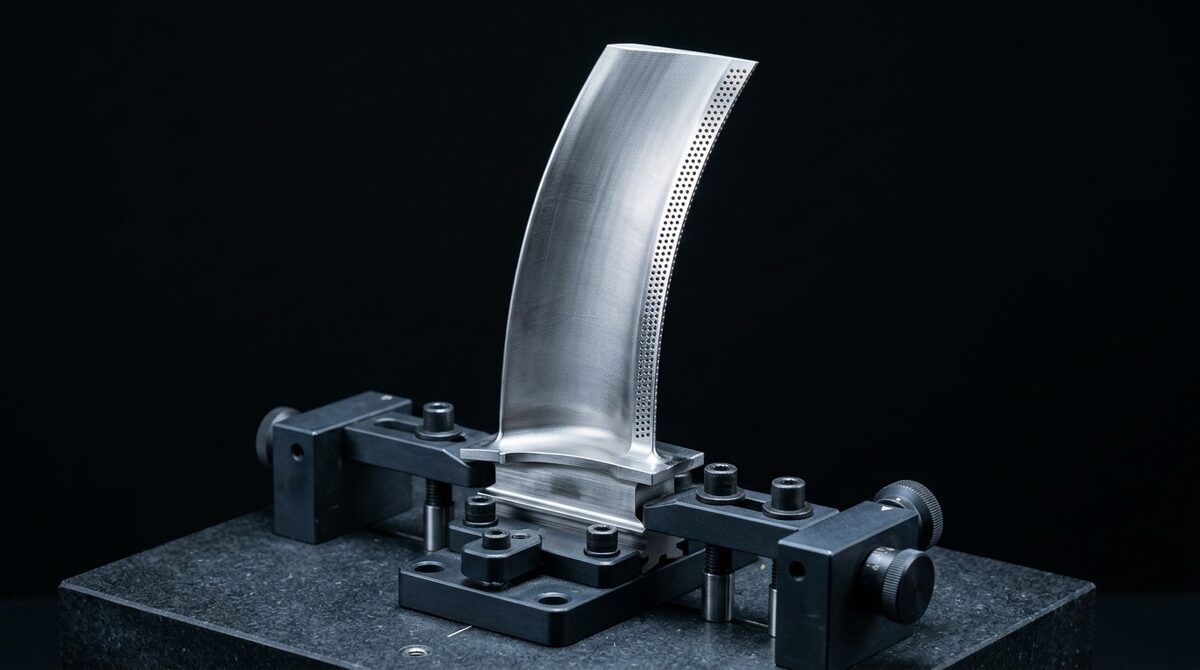
New aircraft grab the headlines, but the engine aftermarket is where the deepest, most durable demand sits. Deloitte’s 2026 aerospace and defense outlook reports that engine activity is the dominant driver of maintenance, repair, and overhaul, with aftermarket companies citing double-digit growth and record sales and backlogs. Aviation Week projects that global commercial MRO demand will grow at a 3.2% compound annual rate through 2035, and that the engine segment’s share of that work will climb to 53% — faster than any other MRO category. To keep up, some firms have announced capacity expansions of 40% to 50% over the next five years. Aftermarket offerings are also converging into end-to-end service portfolios, and new maintenance hubs — particularly in the Middle East — are reshaping where that work gets done. Every hot-section overhaul involves inspecting, re-drilling, and refurbishing cooling holes, because those features erode and clog over thousands of flight hours. That makes cooling-hole work recurring rather than one-time — a steady stream of high-precision demand that structurally favors shops equipped for EDM.
Defense Adds a Second Engine
Defense demand is compounding the pressure. PwC reports the defense backlog has grown more than 50% in three years and shows no sign of peaking, with a proposed US defense budget that would set a record. Global tensions in Ukraine and the Middle East have pushed procurement of missiles, munitions, and drones to record levels. Military propulsion, guided munitions, fuel injectors, and nozzles all depend on the same small, precise, hard-material holes that commercial engines require. For contract shops, that is a rare and durable alignment: aerospace and defense are pulling in the same direction at the same time. And because qualified operators are scarce, the shops actually capturing this work are the ones pairing EDM capability with automation, the subject of The Machinist Shortage Is Forcing Shops Toward EDM Automation Through 2026.
Qualification Is the Barrier — and the Moat
None of this work is easy to walk into. Aerospace and defense parts carry stringent certification and quality-management requirements, and single-crystal turbine blades and high-temperature alloys are among the hardest materials in the supply chain to machine. Lead times for those materials are already long, which raises the cost of scrapping a part late in its production. That difficulty is exactly why qualified EDM hole-drilling capacity commands a premium: the barrier to entry that frustrates new entrants also protects the shops that clear it. A supplier that can hold position and diameter on angled cooling holes in a nickel superalloy, part after part, is not easily replaced.
The Constraint Is No Longer Demand
The recurring theme across every major 2026 aerospace forecast is that demand has stopped being the industry’s problem. The binding constraints are supply chain performance and workforce capacity — the ability to build, deliver, and sustain at scale. For precision suppliers, that reframes the opportunity in concrete terms. Capacity for high-mix, high-tolerance hole drilling in hardened and exotic alloys is precisely what engine programs and defense primes are short of. Prime contractors are actively working to turn fragile lower-tier suppliers into predictable partners, which means reliable, qualified capacity is valued more than it has been in years. Deloitte expects that supply chain pressure to persist through at least 2027, which means the opportunity is not a single-year spike. Shops that can qualify this work and run it consistently are positioned to win share through the rest of 2026 and well into the multi-year backlog beyond it.
Iron Machine Tool: Built for High-Precision Hole Drilling
Iron Machine Tool supplies Midwest manufacturers with EDM hole drilling and sinker EDM systems engineered for the tight tolerances aerospace and defense programs demand, backed by Mitsubishi Machinery Systems support.
Our Services Include:
- EDM Hole Drilling — Manual and CNC small-hole machines with automatic electrode and guide changers
- Sinker EDM — Precision cavity and detail work in hardened and exotic materials
Ready to add qualified aerospace capacity? Contact Iron Machine Tool to spec the right EDM solution for your program.
Works Cited
- Thompson, Scott. “PwC’s Global Aerospace and Defense: Annual Industry Performance and Outlook | 2026 Edition.” PwC, 9 June 2026, www.pwc.com/us/en/industries/industrial-products/library/aerospace-defense-review-and-forecast.html. Accessed 22 July 2026.
- Berckman, Lindsey, et al. “2026 Aerospace and Defense Industry Outlook.” Deloitte Insights, 13 Nov. 2025, www.deloitte.com/us/en/insights/industry/aerospace-defense/aerospace-and-defense-industry-outlook.html. Accessed 22 July 2026.


