

Three federal data series are telling die and mold shops the same thing from different angles this summer. Equipment output is climbing. Order backlogs keep stacking up. Factories are not running anywhere near full. That combination has a specific meaning for anyone holding a tool room.
Business equipment output is pulling away from everything else
The Federal Reserve’s June 2026 industrial production release put the business equipment index at 98.3, up 5.4 percent from June 2025. Set that beside the other major market groups the Fed tracks and the gap is stark. Consumer goods output fell 1.2 percent over the same twelve months. Nonindustrial supplies rose 1.8 percent, construction supplies 1.5 percent, and materials 1.3 percent. Total industrial production climbed 1.1 percent.
Business equipment is the category that includes the machines factories buy to make other things. A 5.4 percent year-over-year gain, against a total index moving 1.1 percent, says capital goods production is where the activity is concentrated right now.
Plants are not running full, which is the interesting part
Manufacturing capacity utilization sat at 75.7 percent in June 2026, which is 2.5 percentage points under the 1972–2025 average of 78.2 percent. Total industry utilization was 76.1 percent against a long-run average of 79.4 percent.
Rising equipment output paired with soft utilization is not a contradiction. It describes manufacturers building capacity ahead of demand rather than chasing it, which is the pattern that shows up when companies are repositioning supply chains. Tooling sits at the front of that sequence. Before a plant runs a part, someone cuts the mold or the die.
Backlogs keep building
The Census Bureau’s June 2026 advance report on durable goods put unfilled orders for manufactured durable goods at $1,590.1 billion, up 0.6 percent on the month. That figure has risen in twenty-three of the last twenty-four months. Nondefense new orders for capital goods rose 1.2 percent in the same month, to $97.8 billion.
The Manufacturers’ Shipments, Inventories, and Orders survey counts metalworking machinery inside its nondefense capital goods grouping, alongside industrial machinery and material handling equipment. A backlog that keeps growing across two straight years is a backlog that has outrun the capacity available to work it down.
What this means inside a tool room
For die and mold shops, three pressures show up at once.
Lead times get quoted against a backlog, not against a calendar. When every shop in the region is working a queue, the shop that can commit to a date wins work it did not have to underbid.
Complexity is rising alongside volume. Medical device, semiconductor, and aerospace tooling all carry tighter tolerance requirements and more difficult geometry than general industrial work. Sinker EDM earns its place here: deep ribs, sharp internal corners, blind pockets, and surface texture in hardened steel are geometries wire EDM cannot reach.
Capacity is the constraint, not demand. Shops turning away work because the burn queue is full are losing revenue that already walked in the door.
Electrode strategy is where sinker capacity is won or lost
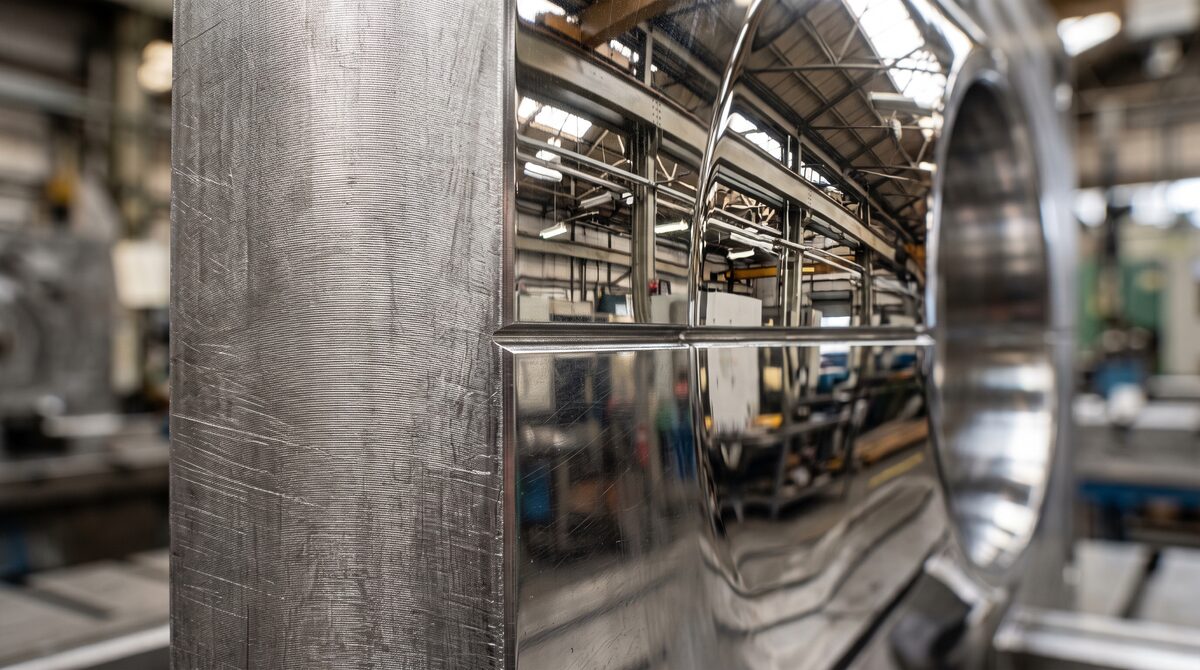
Two shops running the same sinker EDM can post sharply different throughput. The difference is often upstream of the machine.
Graphite roughs faster and holds detail well on large cavity work, at the cost of dust handling and a different milling setup. Copper runs quieter, finishes finer, and suits small detail and fine surface work, though it mills slower. Most production tool rooms carry both and choose by feature.
The electrode count matters as much as the material. Roughing, semi-finishing, and finishing each wear the electrode, so a burn planned around a single electrode tends to stall. Shops that mill electrodes in batches and stage them for the machine keep the sinker cutting rather than waiting.
None of that shows up in a machine spec sheet. It shows up in how a shop plans work, and it is one reason two shops with identical equipment lists post different delivery dates.
Where the demand is actually coming from
The order data points at particular end markets rather than a broad lift.
Aerospace and defense. Commercial aircraft backlogs and defense production both draw heavily on tight-tolerance tooling and first article inspection discipline.
Energy and power equipment. Engine, turbine, and power transmission manufacturers have been raising capital spending, and that work runs on dies and molds.
Medical device. Tolerance requirements here sit at the tight end, and cavity detail often exceeds what wire EDM alone can produce.
Semiconductor. Small hole drilling and micro milling demand has followed the domestic fab buildout.
Each of those markets pushes tooling toward geometry that favors sinker EDM: closed pockets, thin ribs, sharp corners, and specified surface finish in hardened steel.
What Midwest shops should read into it
Minnesota, Wisconsin, and Iowa hold a heavy concentration of tool-and-die, mold, and precision machining operations. Regional shops are competing for the same backlog as everyone else, with one advantage and one exposure.
The advantage is proximity. Tooling work rewards short feedback loops between the mold shop and the customer, and a same-day drive beats an overseas revision cycle on any engineering change.
The exposure is capacity. A backlog that has grown for two straight years rewards the shop that can quote a date and hold it. Shops running a full burn queue with no unattended capability face a hard ceiling on what they can promise, no matter how good the work is.
The pressures do not arrive one at a time
Rising demand would be a simple problem on its own. It is not arriving on its own. The same shops absorbing this backlog are watching an undecided federal decision on tariff treatment for imported machine tools [PLACEHOLDER: Machine Tool Tariffs in 2026: What the Section 232 Machinery Investigation Means for EDM Buyers]. They are also trying to staff burn cells from a tool and die workforce that federal projections show shrinking [PLACEHOLDER: The EDM Operator Shortage Is Reshaping How Mold Shops Buy Machines].
Capacity, cost, and labor are moving at the same time. Shops adding sinker EDM capacity this cycle are generally solving for all three at once rather than treating them as separate purchases.
Iron Machine Tool: EDM and Precision Milling for Midwest Manufacturers
Iron Machine Tool is the exclusive Midwest distributor for Mitsubishi Electric, OPS-Ingersoll, and Roku-Roku Sangyo, serving manufacturers across Minnesota, Wisconsin, Iowa, and surrounding states from Minneapolis. Founded in 2022 by Steve Brown, who brings 15+ years of hands-on EDM experience, the company supports customers from consultation through installation, training, and ongoing service. Mitsubishi machines are supported by MC Machinery Systems, which operates 5 Technical Centers across North America with over 300 dedicated service professionals.
Our Machinery Solutions Include:
- Sinker EDM — Mitsubishi sinker EDM and OPS-Ingersoll large-capacity gantry-type sinker EDM for die and mold work
- 5-Axis Machining — OPS-Ingersoll 5-axis graphite and vertical machining centers for electrode production
Evaluating a machine? Talk to Steve Brown about your application, tolerances, and timeline.
Works Cited
- “Industrial Production and Capacity Utilization – G.17.” Board of Governors of the Federal Reserve System, 17 July 2026, www.federalreserve.gov/releases/g17/current/table0.htm. Accessed 17 Aug. 2026.
- “Manufacturers’ Shipments, Inventories, and Orders.” U.S. Census Bureau, U.S. Department of Commerce, www.census.gov/manufacturing/m3. Accessed 17 Aug. 2026.


