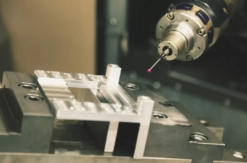
Manufacturing precision has become the defining factor separating successful operations from failing enterprises in today’s competitive industrial environment. Companies across aerospace, medical device manufacturing, and automotive sectors require components machined to exacting tolerances that leave no room for error. The demand for precision parts continues growing at an unprecedented pace, with the global precision machining market projected to reach $180.25 billion by 2030, growing at a 7.8% compound annual growth rate.
3-axis precision milling capabilities form the foundation of modern manufacturing operations, delivering consistent accuracy across diverse material types and complex geometries. Iron Machine Tool specializes in providing manufacturers with the precision milling solutions needed to meet increasingly stringent quality requirements and tight production deadlines.
Current Precision Machining Market Trends
The precision machining industry experiences significant transformation driven by technological advancement and evolving customer demands. The global precision machining market size was estimated at USD 107.06 billion in 2023 and is anticipated to reach USD 180.25 billion by 2030, growing at a CAGR of 7.8% from 2024 to 2030.
Several key factors drive this remarkable growth trajectory. Manufacturers increasingly incorporate computer numerical control machines and robotic systems into their operations to enhance efficiency, reduce errors, and increase production capacity. This technological integration enables production of more complex designs with faster turnaround times, making advanced machining capabilities indispensable across multiple industries.
The rising demand for high-performance materials is another major trend propelling the market. Industries such as aerospace, defense, and medical devices require more advanced materials, including composites, titanium, and other lightweight metals that can withstand extreme conditions. These materials demand specialized machining expertise and equipment capable of maintaining tight tolerances throughout the manufacturing process.
Three-Axis Milling Fundamentals
Three-axis milling represents the cornerstone of precision machining operations, utilizing coordinated movement along X, Y, and Z linear axes to create accurate components. This machining approach provides manufacturers with reliable, cost-effective solutions for producing high-quality parts across numerous applications.
The three-axis configuration offers distinct advantages for many manufacturing requirements. Parts requiring features on a single face or relatively simple geometries benefit significantly from three-axis machining capabilities. The process delivers exceptional accuracy for components requiring tight tolerances and consistent surface finishes.
Three-axis milling excels in applications where production volumes justify dedicated setups and tooling arrangements. The straightforward programming requirements and shorter setup times make this approach ideal for both prototype development and production runs.
Precision Requirements Across Industries
Different industries impose varying precision standards that directly influence machining approach selection. Recognizing these requirements helps manufacturers choose appropriate machining strategies for their specific applications.
Aerospace Component Manufacturing
Aerospace applications demand some of the most stringent precision requirements in manufacturing. Components must withstand extreme operating conditions while maintaining dimensional stability and structural integrity. This trend is particularly evident in aerospace, where lightweight components are essential for fuel efficiency and performance in aircraft and space vehicles.
Critical aerospace components often require tolerances measured in thousandths of an inch or tighter. Surface finish specifications must meet rigorous standards to prevent fatigue failures and ensure optimal aerodynamic performance. Material integrity becomes paramount when machining aerospace alloys that require specialized cutting tools and machining parameters.
Medical Device Precision Standards
Medical device manufacturing imposes unique precision challenges that require exceptional attention to detail. The need for highly accurate and customized components has skyrocketed as the healthcare industry moves toward more complex and minimally invasive surgical tools, implants, and diagnostic equipment.
Biocompatible materials used in medical applications often present machining challenges that require specialized expertise. Surface finish requirements for implantable devices demand mirror-like finishes that promote tissue integration and prevent bacterial adhesion. Dimensional accuracy directly impacts device functionality and patient safety.
Automotive Industry Applications
The automotive sector continues evolving toward more sophisticated manufacturing requirements. The automotive industry’s shift towards electric vehicles (EVs) is also driving demand for precision machining. EVs require different components than traditional internal combustion engine vehicles, and many of these parts, such as electric powertrains, batteries, and lightweight frames, necessitate precision machining.
Traditional automotive components require consistent quality and dimensional accuracy to ensure proper fit and function. Engine components, transmission parts, and suspension elements all depend on precise machining for optimal performance and longevity. Material selection and machining parameters must account for operating stresses and environmental conditions.
Material Capabilities and Considerations
Three-axis precision milling accommodates an extensive range of materials, each presenting unique machining challenges and opportunities. Recognizing material properties enables optimal machining strategies that maximize tool life and part quality.
Aluminum Alloys
Aluminum alloys remain popular choices for precision machining applications due to their excellent machinability and favorable strength-to-weight ratios. Different aluminum grades exhibit varying characteristics that influence cutting parameters and tooling selection.
6061 aluminum provides good machinability with moderate strength properties suitable for structural applications. 7075 aluminum offers higher strength characteristics but requires more careful attention to cutting forces and heat generation during machining.
Surface finish quality in aluminum depends heavily on cutting tool geometry and machining parameters. Proper coolant application helps prevent material adhesion to cutting tools and maintains dimensional accuracy throughout the machining process.
Steel Varieties
Steel machining encompasses numerous grades with vastly different machining characteristics. Carbon steels generally offer good machinability, while alloy steels may require specialized tooling and cutting parameters.
Stainless steel grades present unique challenges due to their work-hardening characteristics and lower thermal conductivity. Tool selection becomes critical to prevent premature wear and maintain surface finish quality.
Heat treatment considerations often influence machining sequences and dimensional control strategies. Some steel grades require machining in specific heat-treated conditions to achieve optimal dimensional stability and surface finish.
Advanced Alloys
Aerospace and medical applications frequently specify advanced alloys that challenge conventional machining approaches. Titanium alloys offer excellent strength-to-weight ratios but require specialized cutting tools and machining parameters.
Inconel and other superalloys present significant machining challenges due to their work-hardening characteristics and high temperature strength. These materials demand careful attention to cutting speeds, feeds, and coolant application to achieve acceptable tool life and part quality.
Tool wear monitoring becomes essential when machining advanced alloys to prevent dimensional deviation and surface finish degradation. Adaptive machining strategies help optimize cutting parameters based on real-time feedback from the machining process.
Quality Control and Measurement
Precision machining success depends on comprehensive quality control systems that verify dimensional accuracy and surface finish requirements throughout production. Modern measurement technologies enable real-time monitoring and adjustment of machining processes.
Coordinate measuring machines provide detailed dimensional verification for complex geometries and tight tolerance requirements. These systems offer repeatable measurement capabilities essential for maintaining consistent quality standards.
Surface finish measurement equipment quantifies surface texture parameters that influence part performance and appearance. Understanding the relationship between cutting parameters and surface finish enables optimization of machining strategies.
Statistical process control methods help identify trends and variations in machining processes before they result in nonconforming parts. These techniques enable proactive adjustments that maintain consistent quality levels throughout production runs.
Tooling Selection and Optimization
Cutting tool selection significantly impacts machining efficiency, part quality, and production costs. Recognizing tool characteristics and application requirements enables optimal tooling strategies for specific machining applications.
Carbide Tooling
Carbide cutting tools offer excellent wear resistance and maintain sharp cutting edges throughout extended machining operations. Different carbide grades provide varying combinations of wear resistance and toughness suitable for specific material applications.
Coated carbide tools extend tool life and enable higher cutting speeds in many applications. Titanium nitride, titanium carbonitride, and diamond-like carbon coatings each offer specific performance advantages for different material combinations.
Tool geometry optimization influences cutting forces, surface finish, and dimensional accuracy. Proper selection of rake angles, relief angles, and cutting edge preparation ensures optimal performance for specific machining applications.
High-Speed Steel Options
High-speed steel tools provide excellent toughness and shock resistance for challenging machining applications. These tools excel in interrupted cuts and applications requiring sharp cutting edges.
Surface treatments and coatings enhance high-speed steel performance in specific applications. Nitriding and other surface hardening treatments improve wear resistance while maintaining tool toughness.
Grinding and sharpening capabilities make high-speed steel tools cost-effective for custom applications and specialized geometries. On-site tool maintenance capabilities extend tool life and reduce inventory requirements.
Process Optimization Strategies
Maximizing three-axis milling efficiency requires systematic approach to process optimization. Recognizing the relationships between cutting parameters, tool performance, and part quality enables continuous improvement of machining operations.
Top 5 Industries Leveraging 3-Axis Machining Precision in Motion demonstrates how diverse sectors benefit from precision three-axis capabilities across automotive, aerospace, medical device, and electronics manufacturing applications.
Cutting Parameter Selection
Feed rates directly influence surface finish quality and dimensional accuracy. Higher feed rates can improve productivity but may compromise surface finish in sensitive applications. Optimal feed rate selection balances production efficiency with quality requirements.
Spindle speed optimization depends on material properties, tool diameter, and surface finish requirements. Proper speed selection minimizes tool wear while maintaining acceptable cutting forces and heat generation.
Depth of cut affects cutting forces, tool deflection, and surface finish quality. Shallow cuts may improve surface finish but reduce productivity, while deeper cuts increase material removal rates but may compromise dimensional accuracy.
Workholding Considerations
Workholding systems must provide rigid support while allowing access for machining operations. ** [Your Company Name] ** understands that proper workholding design prevents part distortion and ensures dimensional accuracy throughout the machining process.
Fixture design influences machining sequence and tool accessibility. Well-designed fixtures enable efficient material removal while maintaining part stability and dimensional control.
Clamping force distribution affects part distortion and stress patterns. Proper clamping design minimizes stress concentrations that could influence dimensional accuracy or cause part distortion.
Economic Considerations
Recognizing the economic aspects of three-axis precision milling helps manufacturers make informed decisions about machining strategies and capability investments. Cost analysis must consider multiple factors beyond simple machining time.
Setup Time Optimization
Setup time represents significant cost component in precision machining operations. Standardized tooling and workholding systems reduce setup complexity and minimize changeover times between different parts.
Fixture design standardization enables faster setups and reduces the learning curve for machine operators. Modular fixturing systems provide flexibility while maintaining setup efficiency.
Tool presetting and offline setup preparation minimize machine downtime during job changeovers. These practices maximize productive machining time and improve overall equipment effectiveness.
Production Volume Analysis
Production volume significantly influences the optimal machining approach and equipment selection. Low-volume applications may benefit from simpler setups and general-purpose tooling, while high-volume production justifies specialized tooling and automation investments.
Break-even analysis helps determine when specialized tooling investments become cost-effective. Recognizing the relationship between setup costs, cycle times, and production volumes enables optimal decision-making.
Learning curve effects reduce unit costs as production volumes increase. Operators become more efficient with specific parts and setups, reducing cycle times and improving quality consistency.
Technology Integration
Modern three-axis milling operations benefit from integration with advanced manufacturing technologies. Disruptive transformation is continuing in the precision machining market, and the most notable trends are automation and the addition of exceptional technologies such as artificial intelligence (AI) and the Internet of Things (IoT).
Computer-aided manufacturing software enables complex toolpath generation and simulation capabilities. These systems optimize cutting parameters and predict potential machining problems before they occur during actual production.
Real-time monitoring systems track machining performance and alert operators to potential problems. Tool wear monitoring, vibration analysis, and power consumption tracking provide valuable feedback for process optimization.
Data collection and analysis capabilities enable continuous improvement of machining processes. Historical performance data helps identify optimization opportunities and predict maintenance requirements.
Future Developments
The precision machining industry continues evolving toward greater automation and intelligence. Increased Automation: The integration of automation and robotics in CNC machining will continue to increase, enabling manufacturers to improve production efficiency, hold even tighter tolerances, and lower costs.
Artificial intelligence applications in machining process optimization show promising developments. Machine learning algorithms can analyze vast amounts of machining data to identify optimal cutting parameters and predict tool wear patterns.
Advanced sensor technologies enable more sophisticated process monitoring and control capabilities. Real-time feedback systems can automatically adjust cutting parameters to maintain optimal performance throughout machining operations.
Supply Chain Resilience
Global supply chain shifts are influencing the market. Companies increasingly seek to diversify their supply chains and reduce dependence on single-source regions. This trend has led to reshoring manufacturing activities, particularly in North America and Europe, where investments in precision machining technologies are rising.
Local manufacturing capabilities provide shorter lead times and greater supply chain control. Domestic precision machining capabilities reduce transportation costs and enable more responsive customer service.
Quality consistency becomes easier to maintain with local suppliers who know specific requirements and quality standards. Close proximity enables regular communication and rapid resolution of any quality issues.
Environmental Considerations
Sustainable manufacturing practices become increasingly important considerations for precision machining operations. The efficiency of robotic milling doesn’t just ramp up production; it trims down waste and operational costs, too.
Coolant management and recycling systems reduce environmental impact while maintaining machining performance. Proper coolant filtration and treatment extend coolant life and reduce disposal requirements.
Energy efficiency optimization reduces operating costs and environmental impact. Variable frequency drives, efficient lighting, and optimized machining parameters contribute to reduced energy consumption.
Waste reduction strategies minimize material waste and improve resource utilization. Optimized cutting parameters and tool path strategies reduce scrap generation and maximize material yield.
Training and Workforce Development
Skilled workforce availability represents a critical factor in precision machining success. Enhanced Quality Control Systems: With the increased complexity of parts being produced, CNC machining will increasingly incorporate advanced quality control measures, such as laser scanning and in-process inspection, ensuring even higher precision.
Continuous training programs keep operators current with evolving technology and best practices. Investment in workforce development ensures consistent quality and productivity improvements over time.
Cross-training initiatives provide operational flexibility and reduce dependence on individual operators. Multi-skilled operators can adapt to changing production requirements and cover for absent team members.
Safety training programs protect workers and reduce liability while maintaining productive operations. Comprehensive safety programs create positive work environments that attract and retain skilled workers.
Ready to transform your manufacturing operations with precision three-axis milling capabilities? Schedule a consultation with our machining experts to discuss your specific requirements and discover how Iron Machine Tool can improve your production capabilities and reduce costs and improve quality.
For manufacturers exploring advanced machining technologies beyond three-axis capabilities, The Future of 3-Axis Machining Precision Efficiency and Innovation provides comprehensive insights into emerging trends and technological developments that will shape precision manufacturing operations.
Industry Standards and Compliance Resources
For comprehensive information on precision machining standards and best practices, manufacturers should reference authoritative sources including NIST precision manufacturing guidelines which provide detailed specifications for measurement accuracy and process control. The American Society of Mechanical Engineers (ASME) offers extensive resources on dimensional and geometric tolerancing standards that directly apply to precision machining operations.
Frequently Asked Questions
What tolerances can three-axis precision milling achieve? Three-axis precision milling can consistently achieve tolerances of ±0.0005 inches or tighter depending on part geometry, material properties, and machining conditions. Critical features may achieve even tighter tolerances with proper process control and measurement systems. Tolerance capability depends on factors including machine condition, environmental controls, and operator skill level.
How does three-axis milling compare to five-axis machining for precision applications? Three-axis milling excels for parts requiring features on single faces or relatively simple geometries, offering cost-effective solutions with shorter setup times and simpler programming requirements. Five-axis machining becomes advantageous for complex geometries requiring multiple setups or compound angles. The choice depends on part complexity, production volume, and precision requirements specific to each application.
What materials work best with three-axis precision milling? Three-axis precision milling accommodates extensive material ranges including aluminum alloys, steel varieties, stainless steels, and many engineering plastics. Material selection depends on application requirements, machining characteristics, and cost considerations. Advanced alloys like titanium and Inconel require specialized tooling and cutting parameters but can achieve excellent results with proper process optimization.
How important is workholding in achieving precision results? Workholding represents a critical factor in precision machining success, directly affecting dimensional accuracy, surface finish quality, and part repeatability. Proper fixture design prevents part distortion, provides rigid support during cutting operations, and ensures consistent part positioning. Investment in quality workholding systems typically pays dividends through improved part quality and reduced setup times.
What quality control measures ensure consistent precision machining results? Comprehensive quality control systems include coordinate measuring machines for dimensional verification, surface finish measurement equipment, and statistical process control methods. In-process monitoring helps identify variations before they result in nonconforming parts. Regular calibration of measurement equipment and environmental controls maintain measurement accuracy and process consistency throughout production runs.