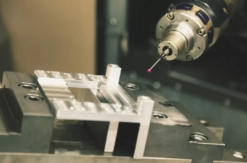
Minnesota’s Automotive Manufacturing Landscape
Minnesota has established itself as a significant player in automotive manufacturing, with numerous companies producing critical components for major automakers and aftermarket suppliers. From precision engine parts to specialized tools and dies, Minnesota automotive manufacturers contribute basic elements to the global automotive supply chain.
The state’s automotive sector spans diverse applications including powertrain components, custom racing parts, specialized tooling, aftermarket accessories, and prototype development. These manufacturers face increasing demands for tighter tolerances, superior surface finishes, and faster production cycles, all maintaining competitive pricing in a global market.
To meet these challenges, Minnesota automotive manufacturers need machine tools that deliver exceptional precision, reliability, and performance. The latest generation of high-precision 3-axis milling centers offers the capabilities needed to maintain quality standards improving production efficiency.
The Critical Role of Precision Milling in Automotive Manufacturing
Modern automotive components demand unprecedented levels of precision. As vehicles become more efficient and environmentally friendly, component tolerances have tightened significantly. Parts that once had tolerances measured in thousandths of an inch now need micron-level precision.
Key automotive applications requiring ultra-precise milling include:
- Engine components with complex geometries
- Cylinder heads with optimized port designs
- Transmission parts requiring perfect surface finishes
- Fuel system components with micro-features
- Custom racing parts built to exacting specifications
- Precision molds for automotive interior components
- Specialized jigs and fixtures for assembly operations
Minnesota automotive manufacturers who invest in high-precision milling technology gain competitive advantages in quality, consistency, and production efficiency. These benefits translate directly to stronger relationships with major automakers and tier-one suppliers looking for reliable partners.
Roku-Roku: Japanese Excellence in High-Precision Machining
For Minnesota automotive manufacturers looking for the highest levels of precision and performance, Roku-Roku represents an exceptional choice. This high-end Japanese machine tool builder specializes in extremely high-precision micro machining centers with accuracies under 0.0001″ (2.5 microns).
Roku-Roku machines feature spindle speeds ranging from 25,000 to 90,000 RPM, providing the capability to work with small-diameter cutting tools at optimal cutting speeds. This combination of speed and precision opens new possibilities for Minnesota automotive manufacturers producing complex components with tight tolerances and superior surface finishes.
Based on specific applications, Roku-Roku offers machines with or without coolant flood capabilities. This flexibility allows Minnesota manufacturers to select the optimal configuration for their particular manufacturing requirements.
Advanced 3-Axis Milling Solutions for Minnesota Automotive Manufacturing
Iron Machine Tool offers a comprehensive range of Roku-Roku high-precision 3-axis milling centers configured for the demands of automotive manufacturing:
ANDROID II
Android II features contactless magnetic linear drive technology delivering micron-level tolerances:
- Machine Travels (X x Y x Z): 17.7″ x 13.8″ x 7.8″
- Table Work Area (X x Y): 21.6″ x 13.8″
- 60,000 RPM Spindle
- HSK-E25 Tool Holder
- 20, 40, or 60 Position ATC
The ANDROID II provides Minnesota automotive manufacturers with exceptional capabilities for producing small, precision components where surface finish and dimensional accuracy directly impact performance. Its linear motor drives eliminate mechanical backlash and provide positioning accuracy measured in microns rather than thousandths of an inch.
Minnesota manufacturers producing fuel injector components, small valve bodies, and precision sensors find the ANDROID II delivers the perfect combination of speed and precision. The 60,000 RPM spindle allows the use of small-diameter cutting tools without sacrificing material removal rates or surface finish quality.
VISION 300
Vision 300 employs contactless magnetic linear drive technology for unmatched accuracy and performance:
- Machine Travels (X x Y x Z): 25.6″ x 21.6″ x 11.8″
- Table Work Area (X x Y): 29.5″ x 21.6″
- 30,000 or 60,000 RPM Spindle
- 20, 40, or 60 Position ATC
With an expanded work envelope compared to the ANDROID II, the VISION 300 maintains exceptional precision accommodating larger automotive components. Minnesota manufacturers producing cylinder heads, intake manifolds, and custom engine blocks benefit from the machine’s combination of work area and precision.
The choice between 30,000 and 60,000 RPM spindle options allows manufacturers to optimize performance for their specific applications. The higher spindle speed supports micro-machining operations, the 30,000 RPM option provides increased torque for more demanding cuts.
MEGA SSS-400/600
MEGA-SSS delivers ultra-precise machining and small hole drilling:
- Machine Travels (X x Y x Z): 16.1″ x 12.9″ x 7.8″
- Table Work Area (X x Y): 23.6″ x 12.9″
- 40,000 or 60,000 RPM Spindle
- HSK-E25 Tool Holder
- 20, 40, or 60 Position ATC
The MEGA SSS series excels at creating precise small holes and intricate features in automotive components. Minnesota manufacturers producing fuel system components, hydraulic blocks, and pneumatic control components find this machine ideal for their precision requirements.
Its rigid construction and thermal stability allow for maintaining tight tolerances even during extended machining operations. The HSK-E25 tooling system maximum rigidity and repeatability when working with small cutting tools.
CEGA SSS-300/400
CEGA-SSS combines 3-axis high-speed milling with an upgraded high-torque spindle for heavier machining capabilities:
- Machine Travels (X x Y x Z): 20.0″ x 16.1″ x 12.2″
- Table Work Area (X x Y): 25.5″ x 16.1″
- 30,000 or 40,000 RPM Spindle
- HSK-E40 Tool Holder
- 20, 40, or 60 Position ATC
For Minnesota automotive manufacturers requiring both precision and power, the CEGA SSS series provides an ideal solution. Its robust construction and high-torque spindle options allow for machining tougher materials common in automotive applications, such as hardened steels and high-silicon aluminum alloys.
The CEGA SSS excels at producing transmission components, brake system parts, and structural elements where material removal rates must be balanced with precision requirements. The HSK-E40 tooling system accommodates larger cutting tools maintaining the rigidity needed for precision work.
ZEUS-86
Zeus-86 represents Roku’s most powerful and largest travel high-speed milling machine, driven by twin-ballscrews that deliver on the most demanding applications:
- Machine Travels (X x Y x Z): 31.4″ x 23.6″ x 15.7″
- Table Work Area (X x Y): 37.4″ x 23.6″
- 25,000 RPM Spindle (20 HP)
- HSK-E50 Tool Holder
- 30 or 60 Position ATC
The ZEUS-86 provides Minnesota automotive manufacturers with high-precision capabilities for their largest components. Engine blocks, transmission cases, and chassis components can be machined with exceptional accuracy their size and complexity.
The 20 HP spindle delivers substantial cutting power maintaining 25,000 RPM capability—a combination that allows for both heavy roughing cuts and precision finishing operations. The twin-ballscrew design rigidity and accuracy across the entire work envelope.
HC-435-II Graphite
HC-435-II Graphite specializes in high-speed graphite machining:
- Machine Travels (XYZ): 16.1″ x 12.9″ x 7.8″
- Table Work Area (XY): 23.6″ x 12.9″
- 36,000 RPM Spindle Speed
- HSK-E25 type Tool Holder
- 20, 40, or 60 Position ATC
For Minnesota automotive manufacturers involved in EDM operations, the HC-435-II Graphite provides dedicated capabilities for creating precision electrodes. Its dust collection system and specialized spindle design make it ideal for graphite machining without cross-contamination issues.
The machine’s precision supports creating complex electrode shapes needed for spark-erosion of intricate automotive components like fuel injector tips, valve seats, and specialized connector housings.
HC-658-II Graphite
HC-658-II Graphite offers expanded graphite machining capabilities:
- Machine Travels (XYZ): 23.6″x 19.6″ x 15.7″
- Table Work Area (XY): 29.5″ x 19.6″
- 32,000 RPM Spindle Speed
- HSK-E40 type Tool Holder
- 30 or 60 Position ATC
With a larger work envelope than the HC-435-II, the HC-658-II Graphite allows Minnesota automotive manufacturers to produce bigger electrodes for EDM operations on larger automotive components. Its precision and surface finish capabilities electrodes that produce exact replicas when used in the EDM process.
Technology Advantages for Minnesota Automotive Manufacturing
Roku-Roku machines incorporate several technological advantages that benefit Minnesota automotive manufacturers:
Linear Motor Technology
Many Roku-Roku machines utilize direct-drive linear motors instead of conventional ball screws. This technology offers:
- Zero backlash for superior positioning accuracy
- Higher acceleration rates for reduced cycle times
- Elimination of mechanical wear components
- Improved surface finishes through smoother axis movement
Thermal Stability
Temperature variation represents a major challenge in precision machining. Roku-Roku addresses this with:
- Symmetrical machine structures that expand uniformly
- Active thermal compensation systems
- Temperature-controlled key components
- Insulated enclosures to minimize environmental effects
Advanced Spindle Technology
The high-speed spindles in Roku-Roku machines provide:
- Ceramic bearings for thermal stability
- Oil-air lubrication systems for reliability at high speeds
- Built-in cooling systems to minimize thermal growth
- Minimal runout even at maximum speeds
Rigid Machine Construction
The base structures of Roku-Roku machines vibration-free operation:
- Cast iron components with optimized ribbing
- Polymer concrete bases in select models
- Three-point leveling systems for proper installation
- Vibration-damping technologies
Applications in Minnesota’s Automotive Industry
Minnesota automotive manufacturers utilize high-precision 3-axis milling for numerous specialized applications:
Powertrain Components
Precision-machined powertrain parts need exceptional accuracy for proper function:
- Cylinder heads with optimized port geometries
- Fuel injector bodies with micro-precision features
- Custom intake manifolds with flow-optimized passages
- Specialized connecting rods for performance applications
Brake System Components
Modern vehicle brake systems demand high-precision components:
- Master cylinder bores with perfect surface finishes
- ABS components with tight-tolerance flow passages
- Caliper bodies with precise piston bores
- Composite brake component molds
Racing and Performance Parts
Minnesota’s growing performance automotive sector needs specialized machining:
- Custom throttle bodies with precise airflow characteristics
- Lightweight racing components with optimized structures
- Specialized valve train components
- Custom engine management system housings
Tooling and Fixture Production
Automotive manufacturing needs specialized tooling:
- Inspection fixtures with micron-level accuracy
- Assembly jigs for complex component integration
- Test fixtures for verification processes
- Prototype tooling for new model development
Integration into Minnesota Automotive Production Systems
Modern automotive manufacturing needs seamless integration between systems. Roku-Roku machines support this through:
CAD/CAM Integration
- Direct import capabilities for all major CAD formats
- Specialized post-processors for optimal toolpath generation
- Simulation tools to verify programs before machining
- Tool database integration for consistent setups
Quality Verification
- On-machine probing capabilities
- Data export for statistical process control
- Interface compatibility with CMM systems
- Documentation generation for quality certification
Automation Options
- Automated pallet systems for continuous production
- Robot-ready interfaces for part handling
- Integration with existing manufacturing cells
- Remote monitoring and notification systems
Support for Minnesota Automotive Manufacturers
Iron Machine Tool provides comprehensive support for Minnesota automotive manufacturers implementing Roku-Roku machining centers:
- On-site installation and commissioning
- Operator training customized to automotive applications
- Programming assistance for complex components
- Preventive maintenance programs
Our Minnesota-based service technicians know the critical nature of automotive production. We provide rapid response for service needs, with most issues resolved within 24 hours to minimize production disruptions.
Investment Considerations for Minnesota Automotive Manufacturers
For Minnesota automotive manufacturers considering high-precision 3-axis milling technology, several factors deserve consideration:
- Current and future precision requirements
- Production volume and part complexity
- Material requirements (aluminum, steel, graphite, etc.)
- Integration with existing manufacturing systems
- Return on investment calculations
Iron Machine Tool provides comprehensive consultation to help Minnesota manufacturers determine the optimal Roku-Roku solution for their specific automotive applications. We analyze current production requirements and future growth plans to recommend the most appropriate technology investment.
Contact Iron Machine Tool
Ready to explore how high-precision 3-axis milling can transform your Minnesota automotive manufacturing operation?
Contact Iron Machine Tool for information or to schedule a demonstration.
Learn why leading Minnesota automotive manufacturers trust Iron Machine Tool for their precision machining needs. Contact us today to discuss how we can help you improve your manufacturing capabilities.
10 FAQs for your Roku-Roku 3-Axis Milling Centers
What makes Roku-Roku machines ideal for automotive manufacturing in Minnesota? Roku-Roku machines offer exceptional precision with accuracies under 0.0001″ (2.5 microns) and spindle speeds ranging from 25,000 to 90,000 RPM. This combination enables Minnesota automotive manufacturers to produce complex components with tight tolerances and superior surface finishes that modern automotive designs demand.
How do contactless magnetic linear drives improve machining precision? Contactless magnetic linear drives eliminate mechanical backlash found in conventional ball screws, delivering positioning accuracy measured in microns. This technology provides higher acceleration rates for reduced cycle times, eliminates mechanical wear components, and improves surface finishes through smoother axis movement.
Which Roku-Roku machine is best for producing small, precision automotive components? The ANDROID II with its 60,000 RPM spindle and HSK-E25 tool holder is ideal for small, precision automotive components. Its linear motor drives and 17.7″ x 13.8″ x 7.8″ travel envelope make it perfect for manufacturing fuel injector components, small valve bodies, and precision sensors where surface finish and dimensional accuracy directly impact performance.
Can Roku-Roku machines handle both aluminum and hardened steel automotive parts? Yes, machines like the CEGA SSS-300/400 and ZEUS-86 are specifically designed with high-torque spindles that can effectively machine both aluminum and hardened steels common in automotive applications. The ZEUS-86 with its 20 HP, 25,000 RPM spindle can handle everything from heavy roughing cuts to precision finishing operations.
What advantages do high-speed spindles provide for automotive component manufacturing? High-speed spindles (25,000-90,000 RPM) allow the use of small-diameter cutting tools at optimal cutting speeds, creating micro-features with exceptional surface finishes. They enable faster machining reducing cutting forces, resulting in better part accuracy, improved tool life, and the ability to create complex geometries that would be impossible at conventional speeds.
How do Roku-Roku machines address thermal stability issues in precision machining? Roku-Roku machines incorporate symmetrical structures that expand uniformly, active thermal compensation systems, temperature-controlled key components, and insulated enclosures. These features minimize the effects of temperature variations during machining, maintaining micron-level precision even during extended production runs.
Which Roku-Roku machine is recommended for graphite electrode production? The HC-435-II and HC-658-II Graphite machines are specifically designed for high-speed graphite machining. They feature specialized dust collection systems and spindle designs that prevent cross-contamination issues. The HC-658-II offers a larger work envelope (23.6″ x 19.6″ x 15.7″) for bigger electrodes used in EDM operations on larger automotive components.
How do Roku-Roku machines integrate with existing automotive production systems? Roku-Roku machines support direct import capabilities for all major CAD formats, specialized post-processors for optimal toolpath generation, on-machine probing capabilities, and interfaces for automation systems. They can be integrated with pallet systems, robots for part handling, and connected to manufacturing execution systems for seamless operation.
What maintenance support does Iron Machine Tool provide for Minnesota automotive manufacturers? Iron Machine Tool provides comprehensive support including on-site installation and commissioning, operator training tailored to automotive applications, programming assistance for complex components, and preventive maintenance programs. Our Minnesota-based service technicians offer rapid response with most issues resolved within 24 hours to minimize production disruptions.
How can Minnesota automotive manufacturers determine which Roku-Roku machine best fits their needs? Iron Machine Tool provides comprehensive consultation analyzing current production requirements, future growth plans, precision needs, production volume, part complexity, and material requirements. This assessment helps Minnesota manufacturers select the optimal Roku-Roku solution for their specific automotive applications, the best return on investment.