
Iron Machine Tool – High-Accuracy CNC & EDM Machines in Minneapolis, MN
Medical device manufacturing operates within tolerance specifications that challenge conventional machining capabilities. Surgical instruments, implantable devices, and diagnostic equipment require dimensional accuracies measured in microns where deviations of mere thousandths of a millimeter can compromise patient safety and device functionality. Advanced precision machining technologies have become essential for producing medical components that meet increasingly stringent regulatory standards and clinical performance requirements.
The medical device sector represents one of the fastest-growing markets for micro-precision manufacturing. Components for minimally invasive surgical procedures, implantable cardiac devices, and diagnostic instruments demand manufacturing processes capable of achieving tolerances within 1-5 microns while maintaining biocompatibility and surface quality standards that prevent adverse tissue reactions.
Regulatory Drivers Behind Precision Requirements
FDA regulations and international standards establish rigorous quality requirements for medical device manufacturing. ISO 13485 certification mandates comprehensive quality management systems that ensure consistent production of devices meeting safety and performance specifications. Design control processes require manufacturers to validate that production methods can reliably achieve dimensional tolerances and surface finish specifications critical to device function.
Biocompatibility testing evaluates how materials and surface conditions affect tissue response. Surface roughness values, edge radii, and dimensional consistency all influence cellular adhesion, protein deposition, and inflammatory reactions that determine implant success. Precision machining directly impacts these characteristics through control of cutting parameters, tool selection, and finishing operations.
Traceability requirements extend throughout medical device supply chains. Manufacturers must document material certifications, machining process parameters, dimensional inspection results, and sterilization validation data for every component. This comprehensive record-keeping enables investigation of adverse events and supports continuous improvement initiatives that enhance manufacturing capability and device performance.
Critical Applications in Medical Manufacturing
Orthopedic implants exemplify micro-precision machining requirements in medical devices. Hip and knee replacement components feature bearing surfaces with tolerances within 5 microns and surface finishes below 0.05 microns Ra. These specifications ensure proper articulation, minimize wear particle generation, and extend implant longevity. CNC turning and precision milling operations produce these surfaces with the dimensional accuracy and consistency required for reliable long-term performance.
Surgical instruments for minimally invasive procedures incorporate features measuring less than 1 millimeter. Laparoscopic tools include cutting edges with radii below 10 microns, jaw mechanisms with clearances held to 25 microns, and actuation systems requiring precise alignment of components measuring just millimeters in length. Wire EDM and micro-milling technologies enable production of these intricate features with the geometric accuracy necessary for proper instrument function.
Cardiovascular devices present unique precision challenges. Stent manufacturing requires laser cutting or EDM of tubular structures with wall thicknesses between 50-150 microns. Strut widths must remain consistent within 5 microns to ensure uniform mechanical properties and predictable expansion characteristics. Heart valve components incorporate leaflets with thicknesses below 0.5 millimeters where dimensional uniformity directly impacts hemodynamic performance and durability.
Dental implant systems demand precision at the interface between implant bodies and abutment connections. Thread forms with tolerances within 10 microns ensure proper seating and load distribution. Manufacturers exploring similar precision requirements in other industrial applications can examine How EDM Technology Is Reshaping Aerospace Component Manufacturing in 2025 to understand how advanced machining capabilities translate across high-precision sectors.
Microfluidic devices for diagnostic testing contain channel geometries with dimensions measured in microns. These channels must maintain width and depth tolerances within 3 microns to ensure accurate fluid flow and consistent test results. Micro-milling operations using tools as small as 100 microns in diameter create these features with the precision necessary for reliable diagnostic performance.
Technology Requirements for Medical Device Production
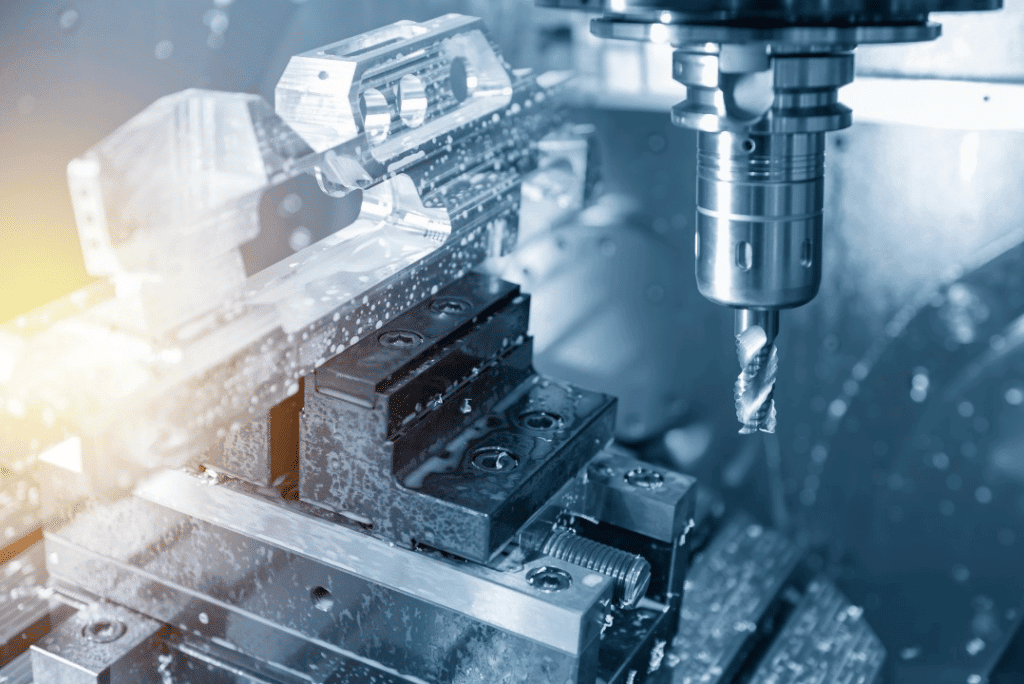
CNC machining centers designed for medical device work incorporate specialized features that address precision requirements. Five-axis milling systems enable complete machining of complex geometries in single setups, eliminating positioning errors that accumulate across multiple operations. High-speed spindles operating at 40,000-60,000 RPM support use of small-diameter cutting tools while maintaining surface finish quality.
Thermal management systems stabilize machine tool temperatures to prevent dimensional variations from thermal expansion. Precision granite machine bases and temperature-controlled enclosures maintain positioning accuracy within sub-micron ranges during extended production runs. Environmental controls regulate ambient temperature and humidity to minimize their effects on measurement and machining accuracy.
Tool measurement and compensation systems verify cutting tool dimensions before each operation. Laser tool setting equipment measures tool length and diameter with resolution below 1 micron, enabling automatic offset adjustments that maintain dimensional accuracy as tools wear. In-process measurement probes verify critical features during machining, allowing real-time corrections before completing parts.
EDM technology serves specialized applications where conventional cutting tools cannot achieve required geometries or surface conditions. Wire EDM produces sharp internal corners, narrow slots, and complex profiles in hardened tool steels used for injection molds and stamping dies. The FDA’s Quality System Regulation establishes current good manufacturing practice requirements for medical device manufacturers to ensure consistent production of safe and effective devices through comprehensive quality management systems.
Sinker EDM creates deep cavities and intricate three-dimensional forms in mold tooling for polymer-based medical devices. Electrode manufacturing requires micro-milling capabilities that produce copper or graphite electrodes with feature details measuring less than 100 microns. This multi-step process enables production of injection molds that form medical components with the dimensional accuracy and surface quality specifications required.
Material Considerations in Medical Machining
Biocompatible materials present distinct machining challenges. Titanium alloys used in orthopedic and dental implants generate high cutting temperatures and cause rapid tool wear. Specialized cutting tool geometries, advanced coatings, and optimized cutting parameters enable consistent production while maintaining dimensional tolerances and surface finish requirements.
Stainless steel grades selected for surgical instruments balance corrosion resistance with mechanical properties necessary for cutting and grasping functions. These materials work-harden during machining, requiring careful control of cutting forces and tool engagement to prevent dimensional variations and surface degradation. Precision grinding operations produce final surface finishes and edge geometries with the sharpness and consistency surgeons require.
Cobalt-chromium alloys used in cardiovascular devices and joint replacements offer excellent biocompatibility and mechanical strength but prove extremely difficult to machine. Abrasive machining methods and EDM processes overcome hardness limitations while achieving the tight tolerances necessary for proper device function. Surface treatments following machining enhance corrosion resistance and cellular response characteristics.
Polymer materials for medical devices require different machining approaches than metals. PEEK, UHMWPE, and other engineering thermoplastics exhibit thermal sensitivity that affects dimensional stability during and after machining. Temperature control through coolant application and reduced cutting speeds maintains dimensional accuracy while preventing material degradation that could compromise biocompatibility.
Quality Control and Validation Requirements
Inspection and measurement systems verify that medical device components meet dimensional specifications and surface finish requirements. Coordinate measuring machines equipped with touch probes and optical scanners measure complex three-dimensional geometries with accuracy within 1-2 microns. Vision systems inspect surface conditions, edge quality, and feature locations at magnifications enabling detection of defects measuring just microns.
Statistical process control monitors manufacturing consistency across production runs. Control charts track key dimensions and surface finish measurements to identify trends that might lead to nonconforming parts. Process capability studies demonstrate that manufacturing methods can consistently produce components within specification limits with appropriate safety margins.
First article inspection protocols validate new manufacturing processes before full-scale production. Comprehensive dimensional reports document compliance with all specified tolerances and surface finish requirements. Material testing confirms biocompatibility, mechanical properties, and corrosion resistance meet device specifications and regulatory standards.
Manufacturing validation establishes that production processes yield consistent results across multiple lots. Installation qualification verifies equipment operates according to specifications. Operational qualification confirms processes produce acceptable results under normal operating conditions. Performance qualification demonstrates sustained capability to manufacture conforming products over extended production periods.
Workforce Development and Technical Expertise
Medical device machining requires specialized knowledge beyond general CNC programming skills. Operators must understand biocompatibility requirements, regulatory documentation needs, and quality system procedures specific to medical manufacturing. Training programs develop expertise in precision measurement techniques, statistical process control methods, and problem-solving approaches that address the unique challenges of micro-precision work.
Programming complex medical device geometries demands proficiency with advanced CAM software that generates efficient toolpaths for five-axis machining operations. Programmers must optimize cutting strategies to minimize tool deflection, manage thermal effects, and achieve required surface finishes while maintaining productivity targets. Simulation capabilities verify programs before machining expensive biocompatible materials.
Process engineering expertise ensures manufacturing methods consistently achieve required tolerances and surface conditions. Engineers select appropriate cutting tools, establish machining parameters, and develop inspection strategies that verify conformance to specifications. Continuous improvement initiatives identify opportunities to enhance capability, reduce cycle times, and improve quality through data-driven decision-making.
Tooling and fixture design supports precision machining of medical device components. Workholding systems must secure small, delicate parts without inducing distortion while providing access for multi-axis machining operations. Modular fixturing concepts enable efficient setup changes between different part numbers while maintaining positioning accuracy within micron tolerances.
The skilled labor shortage affects medical device manufacturing as it does other precision machining sectors. Die and Mold Makers Face Skilled Labor Shortage as Demand Surges explores workforce challenges across precision manufacturing industries where demand for advanced machining capabilities exceeds available technical expertise, creating opportunities for manufacturers who invest in training and technology adoption.
Market Growth and Investment Outlook
Medical device manufacturing continues expanding as aging populations drive demand for joint replacements, cardiovascular devices, and diagnostic equipment. Industry analysis shows medical applications contribute 48% to precision machining market growth as device manufacturers adopt micro-precision manufacturing technologies that enable next-generation products with improved clinical outcomes and reduced invasiveness.
Minimally invasive surgical techniques require instruments with smaller profiles and more intricate mechanisms than traditional open surgery tools. This trend drives investment in micro-machining capabilities that can produce components measuring just millimeters in key dimensions while maintaining functional tolerances within single-digit microns. Manufacturers who develop these capabilities position themselves for growth in expanding medical device markets.
Regulatory changes emphasizing post-market surveillance and traceability increase the importance of manufacturing process control and documentation. Investment in quality systems, measurement equipment, and production monitoring technologies becomes essential for maintaining market access and competitive position. These requirements favor manufacturers with established quality management systems and proven capability to meet stringent medical device specifications.
According to the American Society of Mechanical Engineers’ standards for medical device development, computational modeling and advanced manufacturing techniques play increasingly critical roles in accelerating device innovation while reducing development costs and ensuring regulatory compliance through credible digital evidence.
Iron Machine Tool: Medical Device Manufacturing Solutions
Iron Machine Tool provides precision machining equipment for medical device manufacturers requiring micro-precision capabilities. Our EDM systems handle the tight tolerances and complex geometries medical component production demands. Wire EDM technology produces intricate features in hardened tool steels for mold manufacturing. Sinker EDM creates three-dimensional cavity details essential for polymer device production. EDM hole drilling achieves deep holes in difficult-to-machine biocompatible materials.
Precision milling solutions complement our EDM offerings for complete medical device machining capabilities. Five-axis systems enable efficient production of orthopedic implants, surgical instruments, and diagnostic device components with the dimensional accuracy and surface finish quality specifications required. Our equipment suppliers include Mitsubishi Electric, Roku-Roku Sangyo, and OPS-Ingersoll, manufacturers recognized for precision machine tool technology.
We support medical device manufacturers through equipment selection, installation, training, and ongoing technical service. Our team understands FDA requirements, ISO 13485 quality systems, and the manufacturing challenges specific to biocompatible materials and micro-precision tolerances. This expertise helps medical device companies implement advanced machining technologies that meet regulatory requirements while achieving the productivity and quality objectives necessary for competitive success.
Discover our precision machining solutions designed for medical device manufacturing applications. Contact Iron Machine Tool to discuss how our EDM and CNC technologies can support your medical device production requirements.
Works Cited
“Behind The Scenes of Medical Device Development.” American Society of Mechanical Engineers, www.asme.org/topics-resources/content/behind-the-scenes-of-medical-device-development. Accessed 25 Oct. 2025.
“Quality System (QS) Regulation/Medical Device Current Good Manufacturing Practices (CGMP).” U.S. Food and Drug Administration, www.fda.gov/medical-devices/postmarket-requirements-devices/quality-system-qs-regulationmedical-device-current-good-manufacturing-practices-cgmp. Accessed 25 Oct. 2025.
Related Articles
- How EDM Technology Is Reshaping Aerospace Component Manufacturing in 2025
- Die and Mold Makers Face Skilled Labor Shortage as Demand Surges
