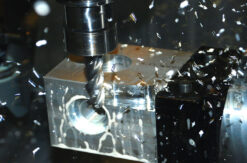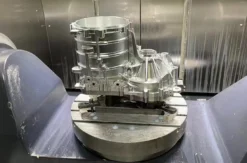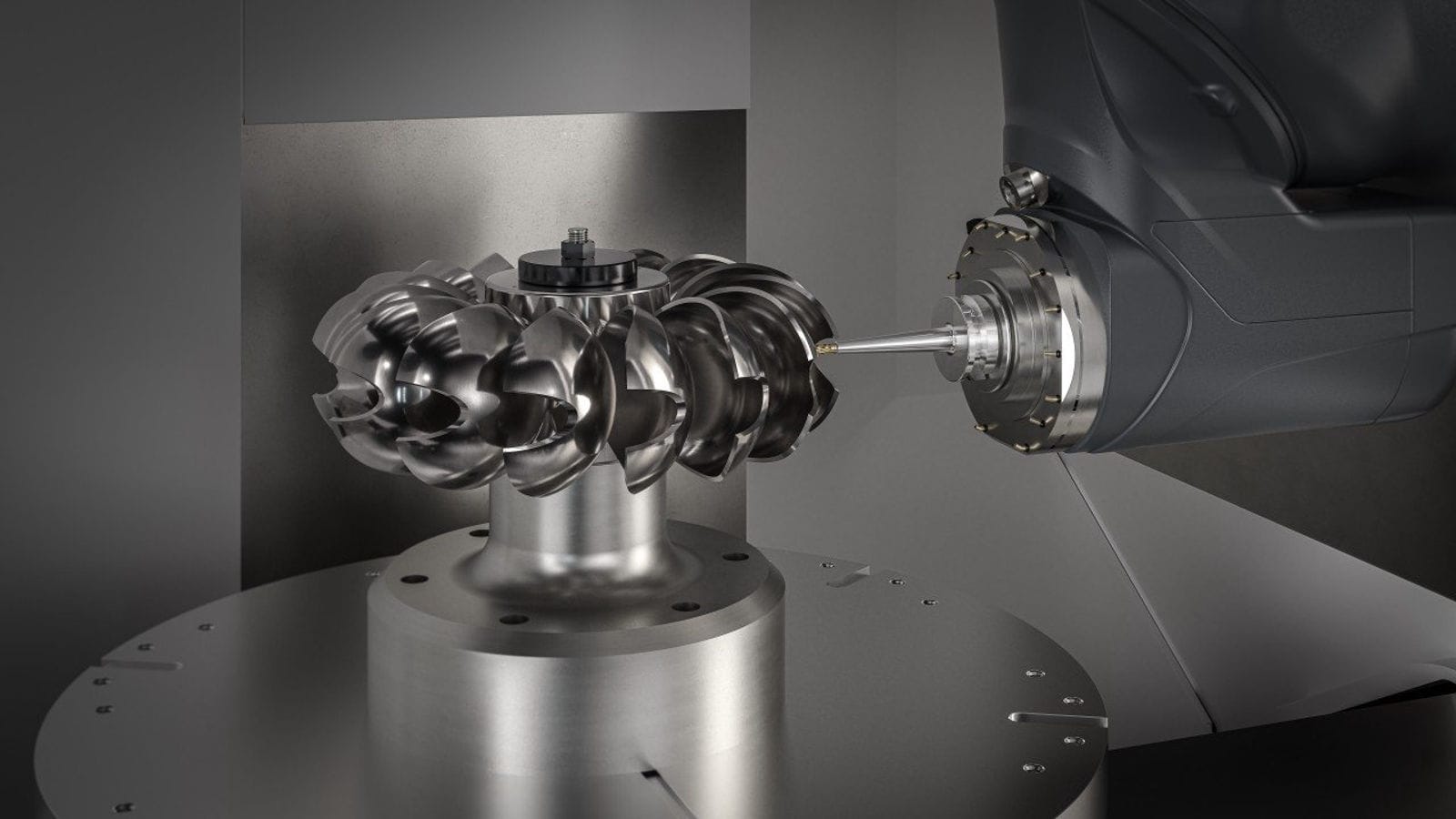
The global 5-axis CNC machining centers market is experiencing unprecedented expansion, with industry analysts projecting growth of $792.5 million from 2024 through 2028. This surge, representing a compound annual growth rate of 6.09 percent, reflects a fundamental shift in how manufacturers approach complex component production as artificial intelligence, self-optimized machine cutting, and hybrid manufacturing technologies transform traditional machining operations.
The market growth is driven by self-optimized machine cutting capabilities, with manufacturers increasingly focused on reducing changeover times to enhance productivity. Unlike conventional three-axis systems that require multiple setups and extended production cycles, five-axis technology enables machinists to approach workpieces from virtually any angle in a single setup, dramatically reducing both setup time and the risk of positioning errors that compromise precision.
The technology’s impact extends across multiple industrial sectors. According to industry analysis published by Machine Design, advanced automation through AI can reduce toolpath programming time from 16 minutes using traditional methods to just seconds, though customization remains necessary to ensure AI-generated toolpaths are accurate and safe for specific manufacturing environments. This efficiency gain becomes particularly critical as manufacturers confront persistent skilled labor shortages and mounting pressure to deliver faster turnaround times without sacrificing quality standards.
Complex Machinery Adoption Accelerates Across Manufacturing Sectors
The shift toward sophisticated multi-axis machining represents more than incremental improvement—it fundamentally reimagines production workflows. Five-axis lathes and advanced mills eliminate the need to switch between multiple machines, requiring less floor space while accelerating production cycles. However, this complexity demands advanced computer-aided manufacturing software and highly skilled programmers to operate equipment effectively.
Digital natives entering the manufacturing workforce are driving adoption of turnkey solutions that bridge skills gaps created by declining formal apprenticeship programs. Unlike previous generations who progressed through structured training, younger machinists often learn on the job, bringing fresh perspectives unburdened by “this is how we’ve always done it” mentalities that can stifle innovation.
Understanding [Why Minnesota Manufacturers Are Adopting 5-Axis Technology to Combat Skilled Labor Shortages] provides critical context for how regional manufacturers leverage advanced equipment to maintain competitiveness despite workforce constraints that challenge traditional production models.
Aerospace and Defense Applications Drive Precision Requirements
The aerospace sector’s demanding specifications create particularly strong demand for five-axis capabilities. Turbine blades, structural housings, and engine components must withstand extreme temperatures and stress while maintaining minimal weight—requirements that push machining precision to its limits. Materials like titanium and Inconel present significant cutting challenges that five-axis systems address through superior tool access and optimized cutting paths.
Research from the National Institute of Standards and Technology documents how precision manufacturing supports critical industrial output, with motor and generator manufacturing representing substantial segments of broader U.S. industrial production. The aerospace industry’s unceasing pressure to produce complex components that perform reliably under severe conditions makes five-axis machining not merely advantageous but essential for meeting safety and performance standards.
Medical device manufacturing similarly demands extreme precision, with implants and surgical instruments requiring tolerances measured in microns. The ability to machine complex geometries from biocompatible materials in controlled environments has made five-axis technology indispensable for manufacturers serving this high-growth sector.
Vertical Integration and Strategic Investment Patterns
Major machine tool manufacturers including DMG MORI, Mazak, Haas Automation, and Mitsubishi Electric are investing heavily in automation features, hybrid system development, and proprietary software that differentiates their offerings in an increasingly competitive marketplace. These investments reflect industry recognition that future competitiveness depends on intelligent manufacturing systems rather than simply faster spindles or larger work envelopes.
The capital-intensive nature of five-axis technology creates barriers to entry that established manufacturers must navigate carefully. While larger operations can justify dedicated five-axis machining centers, small and medium manufacturers require different approaches—often starting with versatile machines that handle diverse workpieces before expanding to specialized equipment as volumes justify investment.
Regional dynamics significantly influence adoption patterns. Asia-Pacific markets, particularly China and Japan, have deployed next-generation systems for aerospace and automotive components, with government incentives supporting smart factory development. North America maintains technological leadership in aerospace applications, though rising competition demands continuous innovation to preserve market position.
Understanding broader industry transformation, as explored in [Aerospace Manufacturing Demands Drive 5-Axis Machining Center Investments to $2.5 Billion], illuminates how sector-specific requirements shape equipment development and investment priorities across the manufacturing ecosystem.
Sustainability and Efficiency Convergence
Modern five-axis systems increasingly incorporate energy-efficient technologies and sustainable practices that align manufacturing operations with environmental responsibilities. Dry machining reduces or eliminates cutting fluids, coolant recycling systems minimize waste, and optimized toolpaths reduce energy consumption per part produced.
High-speed machining strategies that employ fast, light cuts with minimal pressure enable higher material removal rates without sacrificing accuracy—particularly valuable in aerospace and automotive applications where speed and precision remain equally critical. The methodology’s advantages face resistance from manufacturers hesitant to abandon familiar approaches, yet early adopters report significant competitive advantages through improved cycle times and overall efficiency.
The integration of IoT sensors and real-time monitoring transforms machines from standalone tools into connected nodes within smart factory architectures. Predictive maintenance algorithms analyze operational data to identify developing issues before failures occur, minimizing unplanned downtime that disrupts production schedules and strains customer relationships.
Workforce Development and Training Requirements
The sophistication of five-axis systems creates training challenges that extend beyond basic machine operation. Programmers must understand complex CAM software, machinists need spatial reasoning skills to visualize multi-axis movements, and maintenance technicians require electronics expertise alongside mechanical knowledge.
Manufacturers are responding through partnerships with technical colleges, in-house training programs, and relationships with equipment suppliers who provide comprehensive operator education. The investment in human capital proves as critical as equipment purchases, with poorly trained operators unable to exploit the full capabilities that justify five-axis systems’ substantial costs.
Some manufacturers are implementing lights-out manufacturing strategies where automated cells run unattended during off-shifts, potentially reducing labor costs by 30 percent while maximizing equipment utilization. However, these strategies demand extremely reliable systems, robust quality monitoring, and confidence that automated processes will perform correctly without human supervision.
Iron Machine & Tool: Your Precision Machining Partner
At Iron Machine & Tool, we provide manufacturers across Minnesota and the Upper Midwest with advanced CNC machining solutions that deliver the precision, reliability, and efficiency today’s competitive markets demand. Our partnership with OPS-Ingersoll brings German-engineered 5-axis technology to regional manufacturers seeking competitive advantages through superior equipment.
Our Services Include:
- 5-Axis Machining Technology – Complete solutions from high-speed graphite machining to precision coolant-based systems
- Technical Support & Training – Comprehensive operator education and ongoing technical assistance backed by Mitsubishi Machinery Systems’ extensive service network
Ready to Transform Your Manufacturing Capabilities? Contact Iron Machine & Tool to discuss how 5-axis technology can enhance your precision, reduce setup times, and position your operation for long-term competitive success.
Works Cited
“5 Machining Trends to Watch in 2025.” Machine Design, 30 Dec. 2024, www.machinedesign.com/automation-iiot/article/55251170/5-machining-trends-to-watch-in-2025. Accessed 18 Nov. 2025.
Thomas, Douglas S. “Annual Report on U.S. Manufacturing Industry Statistics: 2021.” NIST Advanced Manufacturing Series 100-42, National Institute of Standards and Technology, Oct. 2021, nvlpubs.nist.gov/nistpubs/ams/NIST.AMS.100-42.pdf. Accessed 18 Nov. 2025.
Related Articles
- Aerospace Manufacturing Demands Drive 5-Axis Machining Center Investments to $2.5 Billion
- Why Minnesota Manufacturers Are Adopting 5-Axis Technology to Combat Skilled Labor Shortages