Iron Machine Tool | Minneapolis, MN
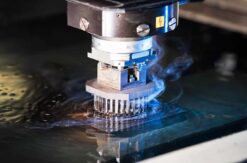
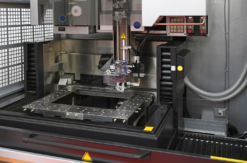
Ask any experienced sinker EDM operator to describe where their shift hours actually go, and the answer is rarely the burn itself. The burn runs. The operator watches, monitors, and waits — and in between burns, they are loading electrodes, repositioning workpieces, tracking which electrode comes next in the sequence, and managing the setup details that keep the machine working on the right features in the right order. On a complex mold cavity job requiring twelve to twenty separate electrode geometries burned in sequence, electrode management can consume as much time as the burning itself. It is not the productive core of sinker EDM work. It is the overhead that surrounds it — and it is the overhead that automation is designed to eliminate.
The electrode management problem is not a niche challenge affecting only the largest or most complex sinker EDM operations. It affects every shop that runs sinker EDM at any volume because of a fundamental characteristic of the process: sinker EDM burns are slow by the standards of modern CNC machining, and the preparation and handling work surrounding each burn is manual and time-consuming in a way that directly limits how many hours of actual burning the machine achieves per shift.
How the Electrode Management Bottleneck Forms
A typical sinker EDM operation for a complex cavity involves multiple electrode geometries — roughing electrodes that rapidly remove large volumes of material, semi-finishing electrodes that refine geometry and begin approaching final dimensions, and finishing electrodes that achieve the surface finish and dimensional accuracy the part requires. Each electrode must be loaded to a precisely referenced position on the machine ram. Each transition between electrodes requires the operator to unload the current electrode, retrieve the next electrode from storage, verify its identity, mount it to the holder, and re-reference it to the established datum before burning can resume.
In a manual operation, each of these steps depends on the operator’s physical presence, attention, and consistency. The operator must be at the machine when the current burn completes to initiate the next electrode load. If they are occupied with another task — grinding, inspection, documentation, setup at another machine — the sinker EDM waits. If the operator is not on shift, the machine waits until one arrives. If the operator loads the wrong electrode, misreferences the position, or skips a verification step under production pressure, the consequences range from minor rework to scrap of a workpiece that may have accumulated twenty or more hours of prior machining.
The cumulative effect across a production week is a machine utilization rate that rarely exceeds 35 to 45 percent of available hours in a typical attended, single-shift operation. The machine is capable of burning continuously. The operation is not capable of keeping it supplied with correctly sequenced electrodes at the pace that continuous burning requires.
Automated electrode management resolves this constraint systematically rather than incrementally. As covered in detail in Why Mitsubishi EDM Automation Is Now the Competitive Standard for Precision Manufacturers, the path to lights-out sinker EDM production runs through automating the electrode and workpiece handling that currently depends on human presence — and the hardware configurations available from Iron Machine Tool provide that path at multiple scales of investment and operational complexity.
EROWA Robot Compact 80: Automated Electrode Handling for Toolroom-Scale Operations
The EROWA Robot Compact 80 is engineered specifically for sinker EDM electrode automation, and it is the system that Aerospace Manufacturing & Design’s national wire EDM product manager at MC Machinery Systems identified in a direct assessment of sinker EDM automation options as the definitive solution for automated electrode changing and workpiece exchange on sinker EDM machines. The EROWA Robot Compact 80 changes electrodes and workpieces automatically, delivering the productivity improvement and cost reduction that transform the economics of sinker EDM work from a labor-intensive, operator-dependent process into a repeatable, schedulable production operation.
The EROWA system’s core advantage is its palletization architecture. Electrodes and workpieces are premounted on precision EROWA pallets with datums established once — typically on a coordinate measuring machine or a reference chucking station — before they enter the automated workflow. Those datums remain with the pallet throughout the entire process, from graphite mill to magazine storage to the sinker EDM. When the robot loads an electrode onto the machine, it is referencing the pallet datum that was established when the electrode was mounted. No re-probing, no re-referencing, no opportunity for operator-introduced positioning error. The electrode arrives at the machine in the correct orientation, at the correct datum, ready to burn.
This palletization discipline also enables the electrode management sequence to be programmed and executed without operator intervention. The cell management software knows which electrodes are queued, in what sequence they are required, which pallets contain them in the magazine, and when the current burn cycle will complete. The robot executes the exchange sequence automatically — retrieving the next electrode before the current burn finishes, making the swap at the precise moment the machine signals completion, and returning the used electrode to its designated magazine position for inspection or disposal. The operator can be engaged on another task, in a planning meeting, or not present at all, and the sinker EDM continues producing.
For shops currently running manual electrode changes on a single sinker EDM and considering their first automation investment, the EROWA Robot Compact 80 represents the most direct path to lights-out operation for that machine. The investment is focused, the integration is well-defined, and the productivity improvement — measured in additional burning hours per day — is immediate and quantifiable from the first production run.
6-Axis Robot Automation: Flexible Cells for Single and Multi-Machine Operations
For shops that need more flexibility in the electrode and workpiece geometries their automation cell handles, or for shops running multiple sinker EDMs that require centralized robotic service, 6-axis robot configurations offer the versatility that pallet-based systems like the EROWA Robot Compact 80 do not provide in their standard configurations.
A 6-axis industrial robot serving a sinker EDM cell replicates the range of motion that a skilled human operator uses to handle electrodes and workpieces — reaching into the machine envelope to load and unload components, accessing magazine storage at multiple angles, and adapting its approach path to the specific geometry of the part being handled. The addition of 4th rotary and 4th/5th rotary packages extends that capability to electrode geometries that require angled presentation to the machine chuck, enabling the automated cell to handle complex form electrodes that would require specialized fixturing or multiple manual intervention steps on a simpler automation system.
For multi-machine installations, a centrally positioned 6-axis robot can supply electrodes and workpieces to two or more sinker EDMs from a shared magazine, making the automation investment serve multiple machines simultaneously. This configuration is particularly effective in mold shops running parallel cavity work across several sinker EDMs — where a single robot cell replaces the electrode handling labor for an entire department, and the machine utilization improvements compound across every machine the robot serves.
Modern Machine Shop’s coverage of dynamic mold production operations confirms that robotic electrode management connected to a graphite milling machine — with the robot transferring finished electrodes from the mill chuck directly to the sinker EDM chuck, maintaining datum traceability throughout — enables shops to run EDM cells around the clock in unattended mode, with the result being that the sinker EDM now runs far more hours per day than the same machine running with manual operator support ever achieved.
The integration between electrode production and sinker EDM burning is also where the OPS Ingersoll Multi-Change system distinguishes itself. For shops running high volumes of graphite electrodes across multiple sinker EDMs, the Multi-Change system connects high-speed graphite milling directly to the sinker EDM burn queue — eliminating the inventory management, handling steps, and lead time between electrode completion and deployment that manual operations require, and replacing them with a continuous flow that keeps the EDMs burning and the graphite mill cutting without interruption.
What Palletization Consistency Means for Part Quality
The quality argument for sinker EDM automation is as compelling as the throughput argument, and it deserves explicit attention. When a human operator manually loads and references each electrode in a multi-electrode burn sequence, the positioning accuracy of that manual operation determines the geometric relationship between successive burns on the workpiece. Even skilled, experienced operators introduce measurable variability in manual electrode referencing — positioning errors on the order of tenths of thousandths that accumulate across a long electrode sequence and manifest as dimensional variation in the finished cavity.
Robotic loading through palletized datums eliminates that source of variability. The robot’s positioning repeatability — measured in microns — is consistent across the hundredth electrode change in a sequence to the same degree it was consistent across the first. The finished cavity reflects only the accuracy of the burn parameters and the electrode geometry, not the accumulated positioning variation of manual loading. For mold and die customers who measure cavities to verify dimensional compliance before accepting tooling, and for aerospace and medical customers whose quality systems require documented dimensional traceability, that consistency is the standard their work demands.
For shops ready to map the full economic case for automation investment against their specific production profile, Lights-Out Sinker EDM: How 6-Axis Robot Automation Is Changing the Economics of Precision Cavity Work provides the analytical framework that translates machine utilization improvements into concrete financial terms.
Iron Machine Tool: Your Partner in Mitsubishi EDM Automation
Iron Machine Tool delivers the future of advanced manufacturing powered by Mitsubishi EDM automation and cutting-edge machinery. Backed by Mitsubishi Machinery Systems’ global expertise, we provide industry-leading automation solutions supported by the largest service and support network in the field.
Our Mitsubishi EDM Automation Solutions Include:
- Sinker EDM Automation — 6-axis robot cells (single and multiple machine), EROWA Robot Compact 80, OPS Ingersoll Multi-Change linear systems, and fully customized automation configurations
- Sinker EDM Machines — Mitsubishi precision sinker EDM platforms engineered for automated cell integration
Ready to Automate Your Sinker EDM Production? Contact Iron Machine Tool to discuss your throughput requirements and find the automation configuration that fits your production floor.
Works Cited
Bystrek, Mike. “EDM Automation.” Aerospace Manufacturing and Design, GIE Media, www.aerospacemanufacturinganddesign.com/article/edm-automation/. Accessed 26 Mar. 2026.
“Robots Join EDM and Graphite Mill for Fast Mold Production.” Modern Machine Shop, Gardner Business Media, www.mmsonline.com/articles/dynamic-duos. Accessed 26 Mar. 2026.
Related Articles
- Why Mitsubishi EDM Automation Is Now the Competitive Standard for Precision Manufacturers
- Lights-Out Sinker EDM: How 6-Axis Robot Automation Is Changing the Economics of Precision Cavity Work